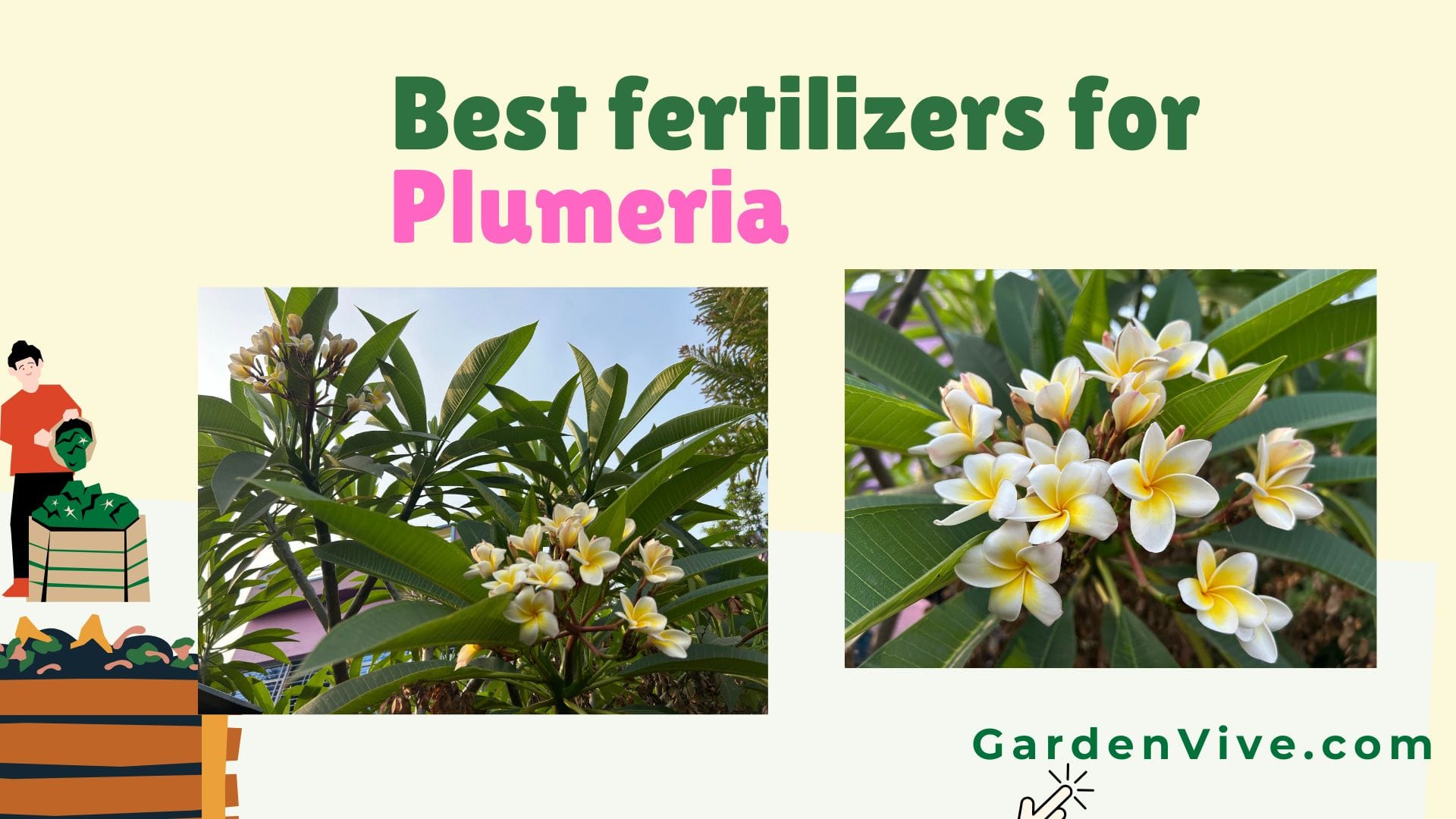
Feeding your Plumeria plant can improve its health, but do you know that it's important to fertilize your plant according to its growth stage. After all, Plumeria is a flowering plant.
We need to fertilize it in such a way that in the active growing season, it can produce a good amount of branches and healthy leaves, and in the blooming season, it produces the maximum amount of blooms.
This article is a complete fertilization guide for a Plumeria plant. You will learn when to feed, what to feed, and when not to feed your Plumeria.
Note: There can't be a straightforward answer to this question: "What is the best fertilizer for a Plumeria plant?" as it depends on a few important factors like your plant's growth stage and your micro-climate or USDA zone.
For some USDA zones, Plumeria does not go into dormancy. If you need to understand dormancy in detail, check my other guide: winter care for Plumeria
In this guide, you will find what type of chemical fertilizer you should apply, along with organic alternatives.
What fertilizer should I use for Plumeria based on growth stage and USDA Zone?
The chart below shows what to feed your Plumeria based on its current growth stage and USDA zone.
| Growth Stage | Timing (USDA Zones 10–12) | Timing (USDA Zones 9 & Below) | Recommended Fertilizer Type |
|---|---|---|---|
| Early Wake-up | March – Early April | Late April – May | Balanced (10-10-10) or Root Activator or Bone meal (3-15-0) |
| Vegetative Growth | April – June | June – July | High Nitrogen (e.g., 15-5-10) or Balanced |
| Bud Set / Peak Bloom | May – August | July – August | High Phosphorus (e.g., 10-30-10 or 5-50-5) |
| Hardening Off | September – October | Late August – September | High Potassium (e.g., 0-0-50) or None |
| Dormancy | November – February | October – March | NONE (Do not fertilize) |
If you don't know your USDA zone, you can still feed according to the growth stage that you are seeing on your plant.
Now, let's explain why we need to fertilize differently for each growth stage.
Fertilizer after dormancy for Plumeria
When your Plumeria wakes up from dormancy or is just about to enter vegetative growth, you need to focus on its root development.
Usually, we feed Phosphorus for root development in other plants. But just after dormancy or winter, it's better to go for a balanced fertilizer that has Nitrogen, Phosphorus, and Potassium in equal ratios.
You can increase the phosphorus value a bit if you wish, but do not go for too much.
If you are going for organic options, feed Bone Meal (3-15-0) or Rock Phosphate. They are slow-release sources of phosphorus that can be mixed into the soil to build a long-term root foundation.
Tip: Humic and Fulvic Acid help roots absorb minerals more efficiently. These are organic compounds and are good for improving soil structure.
Active growing season fertilizer
When your Plumeria plant grows a few new leaves and is in the active growing season, it's time for nitrogen.
How do you understand if the plant is in an active growing season or not? You can witness that the leaves and branches are growing faster than usual.
More branches mean more flowers in the blooming season.
Nitrogen is responsible for lush green foliage and branch stretching.
You can also use foliar spray, as Plumeria leaves are good at absorbing nutrients through the leaves.
If you are looking for organic fertilizer, go for fish emulsion.
Note: Plumeria needs sunlight to process nitrogen. Do not keep your plant in shade.
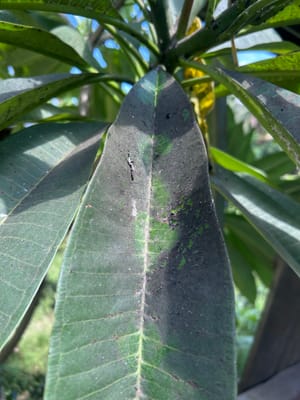
Extreme use of nitrogen can cause curly leaves and delay the blooming season. Stop feeding nitrogen once the plant has reached your desired size or the blooming season approaches.
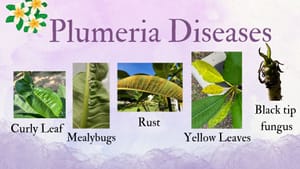
You can refer to these guides: Curly leaf on Plumeria and Why plumeria is not blooming?
Due to a lack of nitrogen, you can witness yellow leaves or pale leaves.
Plumeria fertilizer during the bud development phase
When you see buds are developing, it's time to give your Plumeria high phosphorus fertilizer like 10-50-10 or 15-30-15.
You can also go for the ratio mentioned in the chart. Your goal is to keep the phosphorus value higher than nitrogen and potassium.
When the buds are big enough and are about to bloom in a few days, increase the potassium value. At this stage, you can go for 9-15-30.
Potassium regulates the water pressure within the plant to make sure that the buds actually open and show thick petals and vibrant color.
Note: If your plant is having lots of buds and flowers at the same time, it's important to make sure your plant is getting enough energy to make all the flowers charming.
I usually give 1 tablespoon of Epsom salt per gallon of water once a month. It contains Magnesium Sulfate and the central atom of the chlorophyll molecule. It gives enough energy during the heavy blooming time.
Before dormancy
This growth stage is only applicable to those plumeria that go under dormancy in winter.
Either feed nothing or apply organic fertilizer to your Plumeria if you are growing your Plumeria in warm zones. (Where Plumeria don't go dormant in winter).
If you gonna put your plumeria in the garage or indoors for dormancy in winter, feed high potassium fertilizer before the dormancy phase.
4 to 6 weeks before the first expected frost, feed 0-10-10 or a very low-nitrogen, high-potassium formula like 4-18-38.
Potassium helps plants thicken the cell wall. Thick walls can tolerate cold better. It also helps your Plumeria to store starch. The extra starch is needed to survive in the winter.
Fertilizer during dormancy in winter
In winter/dormancy, do not fertilize your plumeria.
That's it.
I have been growing Plumeria for a long time. If you are a Plumeria lover like me, you must see my other articles on Plumeria. I have talked about almost every pest and disease on plumeria, along with growing, watering, and caring guides.
If you love what I write for you, please subscribe to this site and motivate me to write more for you.
I do not promote any brand in any of my articles, but for Plumeria, Dyna-Gro Liquid Bloom (3-12-6) really triggered blooming most of the time.