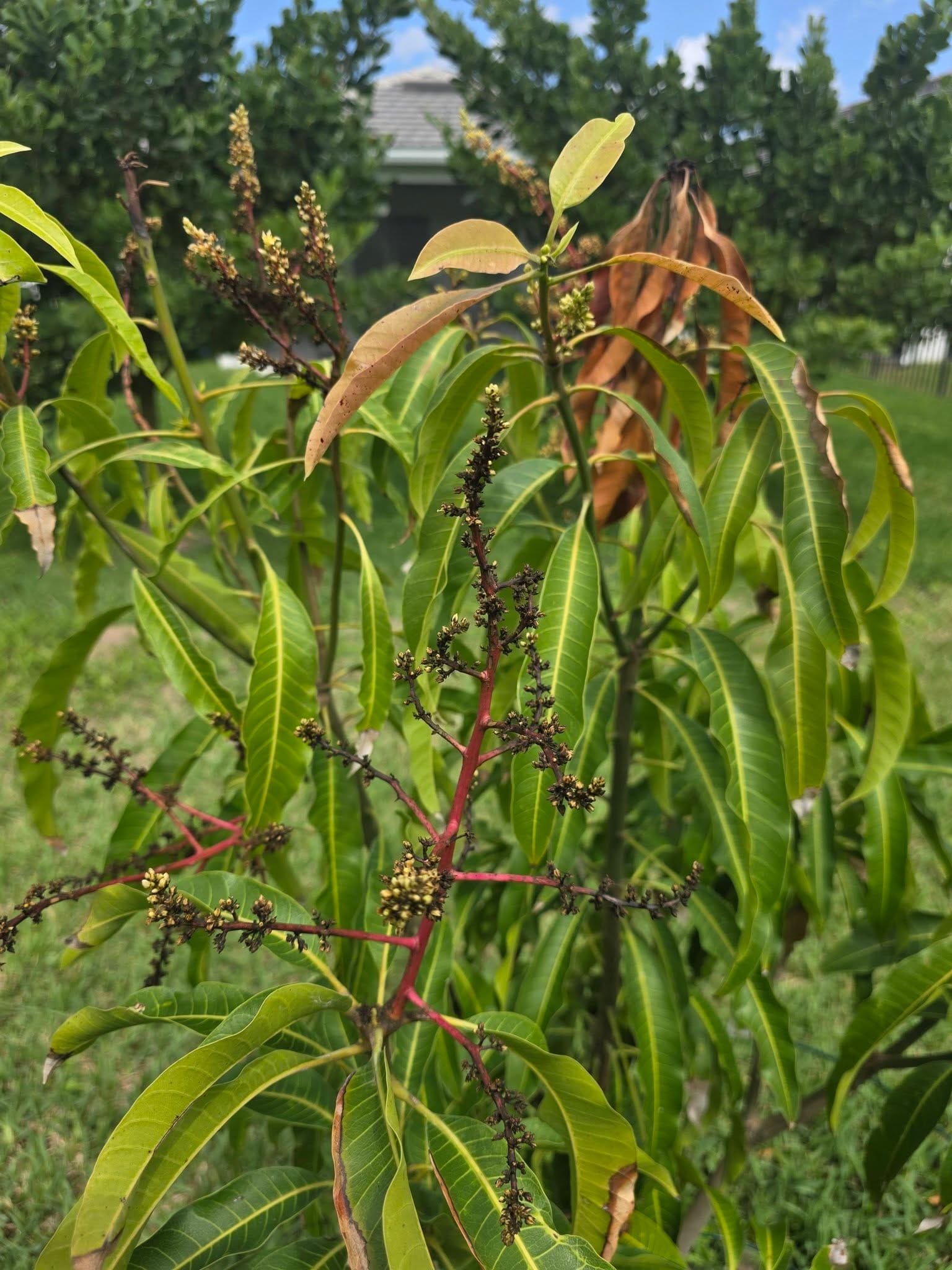
It is not unusual to see mango blossoms drying up and falling rapidly. I have seen this earlier, and the same happened with my aunt's mango trees this year. In this article, I will tell you why the mango blooms dry up and what to do to save the blooms.
The most common reasons are:
- Cold damage (due to cold when it's not supposed to be that cold)
- Fungal infection
- Raindrops on a mango tree while the blossoms are still waiting to turn into tiny fruits.
Mango blossoms are drying up due to cold damage
When the mango tree produces blooms, the temperature should be 15–20°C during the daytime. This is the ideal temperature.
But I have seen years when the weather is colder than expected. Those times become harder for a mango tree. The blooms dry up and fall before becoming small fruits.
Low night temperature is not good for the mango blossoms, and you need to provide your mango tree with some extra micronutrients to make the blossoms stronger.
You can spray Boron (Borax 0.1%) to strengthen the flowers and improve fruit set.
This is what I do:
Prune the completely dried flower clusters so the tree can focus energy on new growth.
Note: Most blossoms fall naturally, and each cluster usually holds only a few mangoes.
But if you see the mango blossoms are dying rapidly, and the clusters are empty, it's time to get worried.
If you are curious to know when to feed your mango tree (based on growth stage), read this: Fertilizer for fruit trees based on growth stage
Mango flowers are drying up due to
Fungal infection
Mango blooming season is usually late fall, and it is not very unusual to get colder nights even in late fall.
Fungal infection is really connected with the cold nights. This is why I introduced this section after the cold damage.
Cold and fog may cause diseases like Powdery Mildew and Anthracnose, which dry the flowers.
Anthracnose is bad for mango blossoms.
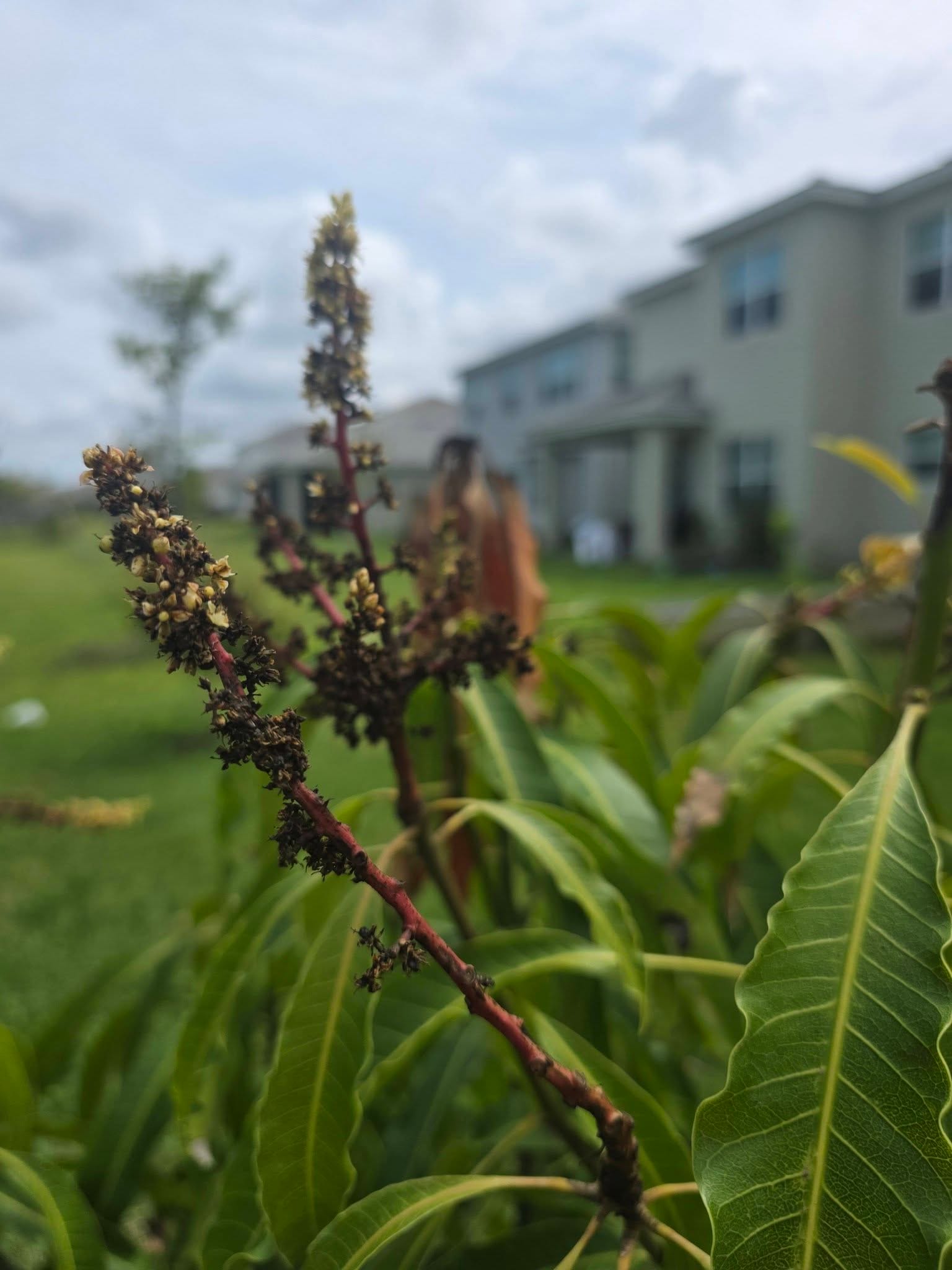
I can say by looking at the picture: "Fungal infection most likely, spray with sulphur, copper, or potassium bicarbonate."
To be more specific, "Looks like Anthracnose. You need to spray with liquid copper."
What to do in this situation?
1st spray:
- Mancozeb – 2–2.5 g per liter of water
After 10–12 days:
- Carbendazim – 1 g per liter
After another 10–12 days (if disease continues):
- Copper Oxychloride – 2.5–3 g per liter
I would suggest spraying every 10–15 days during flowering if the weather is humid or rainy.
Note: Do not spray only on the branches and leaves. Spray on the fruits and flowers too. The fungus stays on the surface of the blooms, panicles, and young fruits.
If you have any confusion or questions on spray, just subscribe and contact me. I will respond.
Mango flowers are falling off due to the rain
You might be surprised to know that raindrops on newly developed mango flowers are like hellfire.
Rain burns the blossoms.
Note: It's bad for only those blooms that are yet to develop tiny circular fruits.
You can check the rain alerts and, if possible, cover your mango tree just before the rain.
I usually don't do this, as most of my mango trees are big and I won't mind losing some of my mango blooms. After all, the cluster can't hold all the fruits at once.
You can subscribe to this site and become a premium member to help me write more like this for you.