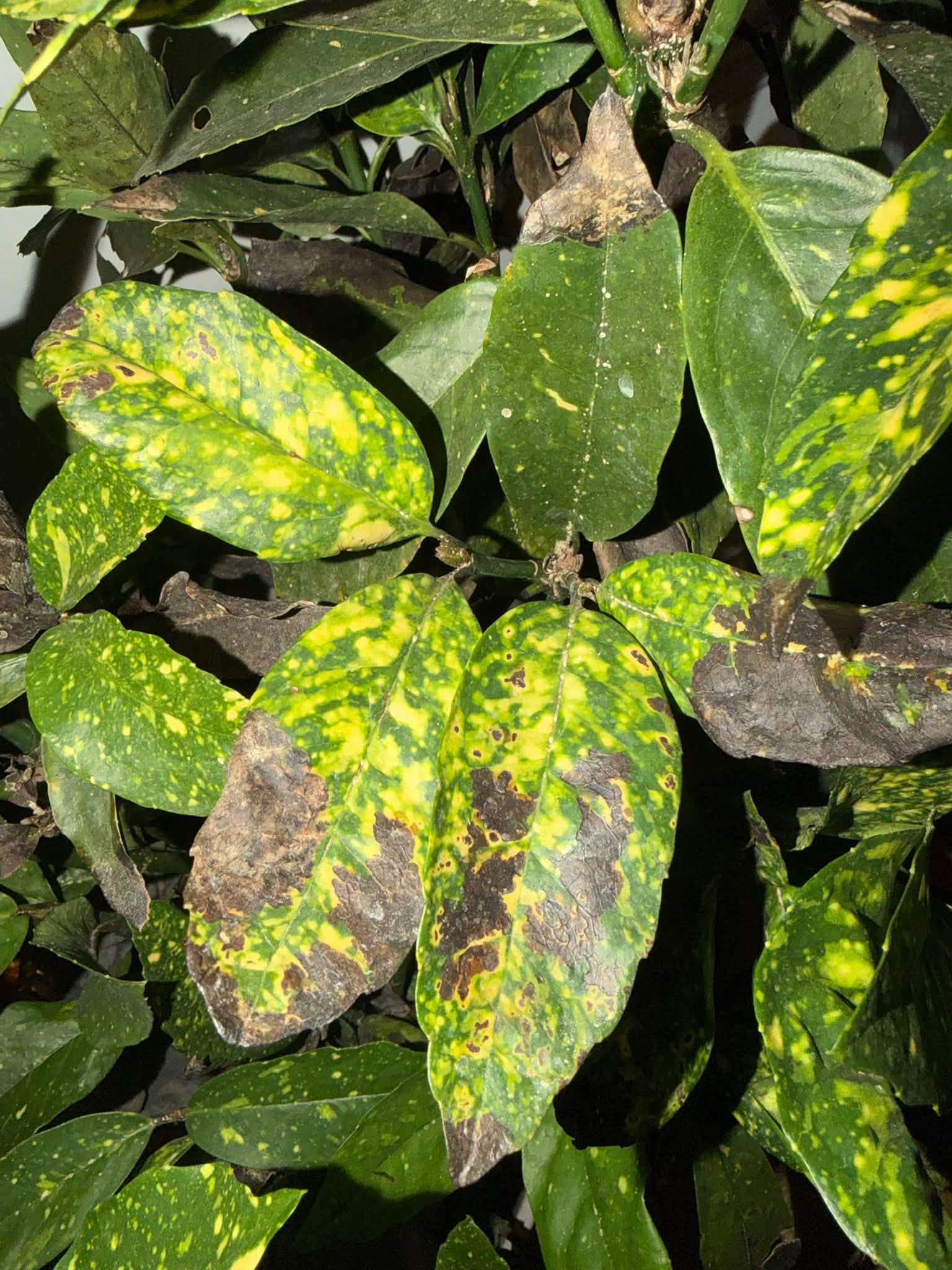
My aunt loves growing plants indoors, and this is what happened to one of her plants. In this article, I will tell you what causes Japanese aucuba plant leaves to turn black and how to treat it.
A week ago, I got an email from her that said:
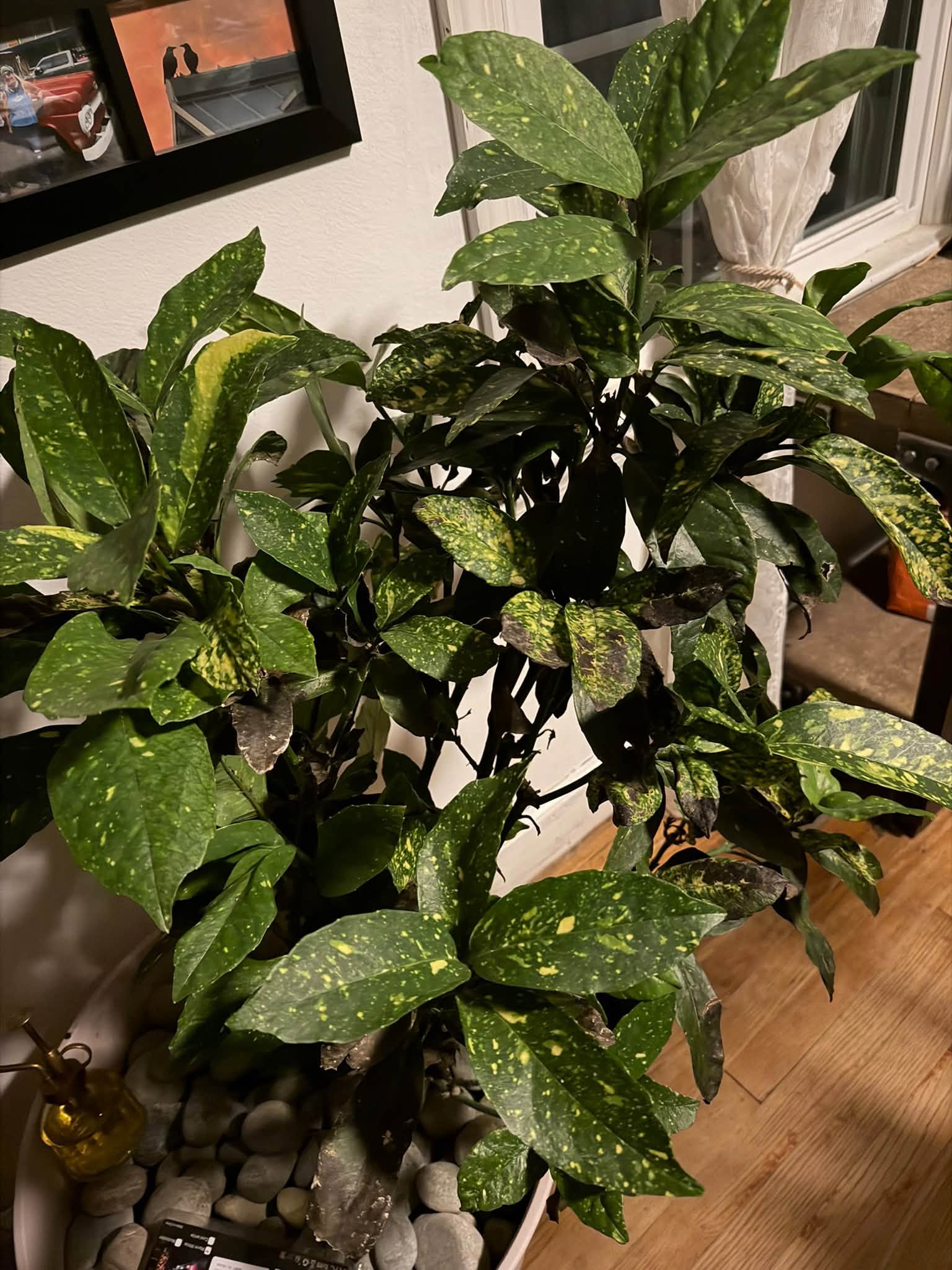
I need some help with my Japanese aucuba. The leaves are blackening. Why does this happen every winter? ( it was fine outside during summer) I believe this is a Japanese Laurel (Japanese Aucuba), indirect sunlight, not too moist soil, and leaves are turning black..?
She also attached a picture to the email:
This is not only with her plant. This is a very common problem with this plant, and through this article, I will help you find the exact reason behind this so that you can treat it accordingly.
If you can't find the exact reason, then this guide will help you to understand their optimal growing conditions (at the end of this guide) so that you can make a better place for your plant with right environment. This will help you to revive your Japanese aucuba plant.
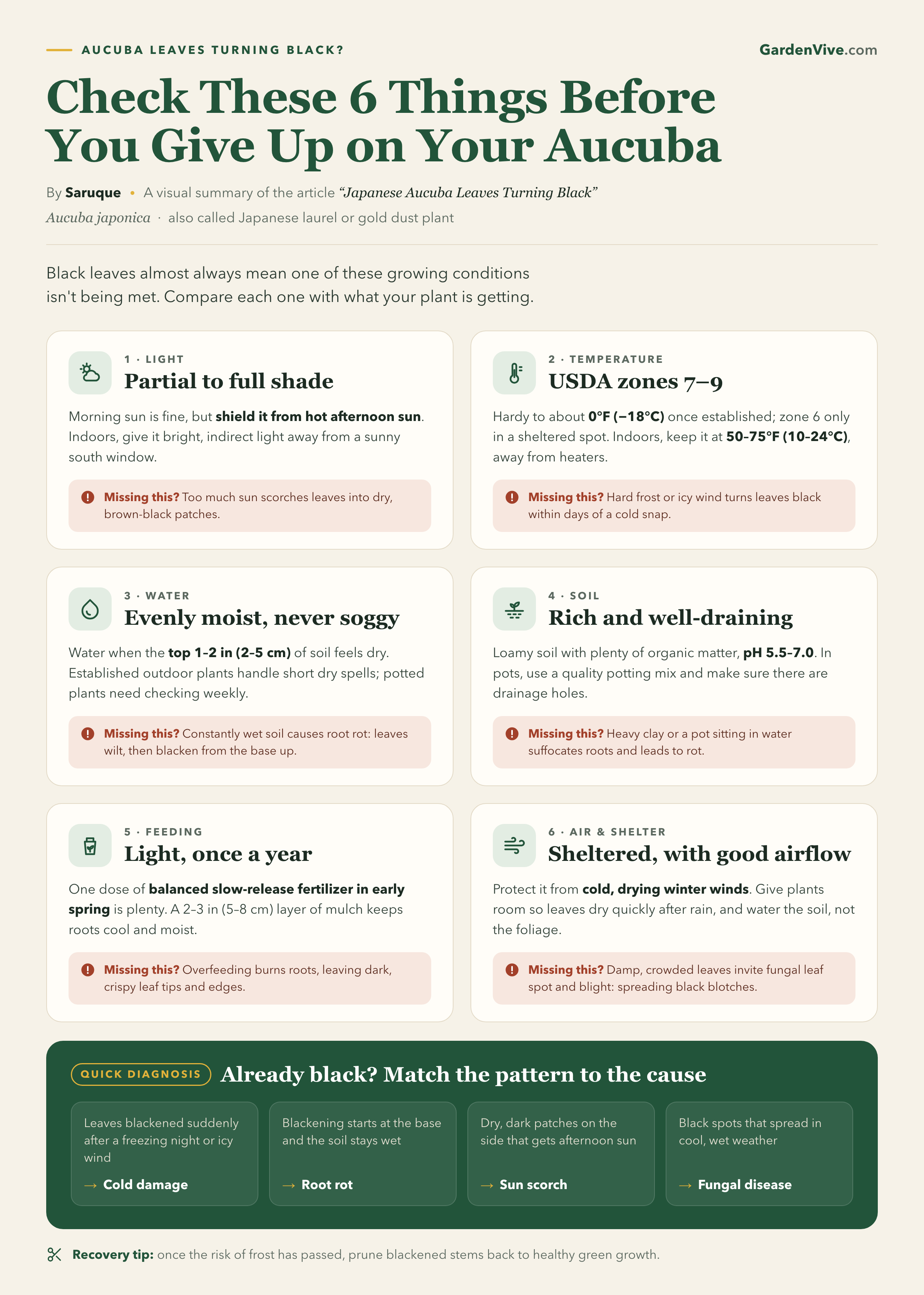
Why are Japanese Aucuba leaves turning black?
There are two major types of blackening of the leaves:
- Only the tips
- Black patches on random spots of the leaves
(I am not gonna share all the possible reasons like nutrient deficiency, transplant shock, this shock that shock bla bla)
On GardenVive, I always share my personal gardening experiences to help your plant. Adding small probable reasons all together is gonna make you more confused. Subscribe to this site to become a member of this site. This is something that makes me smile.
Only the tips are getting black
If you witness only the tips of the leaves are getting black, the most possible reason is overwatering.
Yes, evenly moist soil is good for this plant, but that does not mean you need to overwater. Just water deeply when the top 2 inches of soil is dry.
Make sure the soil has good water drainage.
One more major symptom of overwatering is: you are gonna see the tips turning black in the first position. Within a few days, it will spread and turn the whole leaf black and rotten.
Black patches or spots on the leaves (Random spots)
For an experienced gardener, it's easier to find the reason for this symptom just by looking at the leaves closely.
But explaining it to you without pictures is gonna be a bit difficult for me. But I will try. (Once I manage to click those pictures nearby, I will upload them here)
If you notice, the black spots are actually not black; they are dark brown. This is not a watering issue.
The Japanese aucuba plant is cold-hardy, but the first hard cold of the winter hits it hard sometimes. This is known as sudden cold stress. No need to worry. It will be fixed automatically.
If the black spots or patches are burning the leaves or distorting the leaves, the most likely reason is a fertilizing issue.
Stop feeding her for at least 20 days. Next time, go with organic fertilizer and avoid chemical fertilizer.
If you notice a powdery black substance on the leaves that rubs off onto your finger when touched, it’s likely sooty mold. To learn more about this, refer to this article: Sooty mold on Plumeria
A special note for those who have space to grow this plant outside:
I saw people use them for houseplants, but I love growing it outside. Mine are very happy planted outside in filtered light. It could be the shock of bring it indoors not sure. They are very cold hardy.
I created an infographic for this article; you can save it if you wish.