Admit it or not, we all dreamed of growing a mango tree in our garden at least once, and Florida's climate is suitable for growing Mango trees. In this article, I will guide you on how to grow and care for Mango trees in Florida.
For the past 1 year, I have been thinking of writing this guide (since I published the article: Best fruit trees to grow in Florida). I keep Mango at the first position in that list and wanted to write a detailed guide on Mango for Florida gardeners.
In this guide, I will be covering these:
- Can we really grow a Mango tree in Florida?
- Varieties of mango trees that you can actually grow in Florida
- When do mangoes bloom in Florida
- Planting guide for a Mango tree (Including spacing, planting time)
- Growing guide (Including watering, fertilization, winter care, pest control sprays, and a lot more)
- Pruning guide
Note: All the pictures are taken from my garden. (Except a few diseases pictures)
Can we grow a Mango tree in Florida?
Absolutely yes. I have seen this question in so many gardening groups: "Do mangoes grow in Florida?"
The question might seem a dumb question for mango growers here in FL. But I have tried growing a lot of fruit trees, and some of the trees grow well here in Florida, but don't bear fruit at all.
For mango trees, yes, we can grow mango in Florida easily, and they will produce a good amount of mangoes.
Though the harvesting depends a lot on the variety that you are growing.
Note: Florida is not a small state, and it spans multiple USDA hardiness zones (Zone 8 to 11), each with different climates and growing conditions that directly affect how mango trees should be planted and cared for.
Varieties of mangoes in Florida
Despite our desire to grow a Mango tree in our garden, many gardeners skip this tree due to its large size. I will introduce you to some smaller varieties, too. You can follow my variety table to select a good fit for your specific yard or garden.
To make it easy to read, I have created a chart that will show the height of the mango trees (so that you can get an idea of how large they can grow), the harvesting yield, and the fruit production rate (with proper care).
I know we all have different preferences in taste, thus I will not include any rating on taste. I will just write a bit about my experiences.
| Mango Variety | Suitable Region (Florida) | Growth Habit | Max Height | Fruiting Season | Average Harvesting Yield |
|---|---|---|---|---|---|
| Glenn | South Florida, Central Florida | Moderate | 20–25 ft | May – June | 100–180 fruits |
| Valencia Pride | South Florida | Very Vigorous | 40–50 ft | July – August | 250–400 fruits |
| Pickering | South Florida, Central Florida, North Florida (container) | Dwarf | 8–12 ft | June – July | 40–80 fruits |
| Orange Sherbet | South Florida, Central Florida | Moderate | 15–20 ft | June – July | 80–140 fruits |
| Sugarloaf | South Florida | Moderate | 15–20 ft | June – July | 70–130 fruits |
| Fruit Punch | South Florida | Moderate | 15–20 ft | June – July | 70–120 fruits |
| M-4 | South Florida | Dwarf | 10–15 ft | June – July | 60–100 fruits |
| Peach Cobbler | South Florida, Central Florida | Moderate | 15–20 ft | June – July | 80–140 fruits |
| Sweet Tart | South Florida, Central Florida | Moderate | 15–20 ft | June – July | 80–150 fruits |
| Lemon Zest | South Florida | Vigorous | 25–30 ft | June – July | 120–200 fruits |
| Lemon Meringue | South Florida | Moderate | 15–20 ft | June – July | 80–150 fruits |
| Coconut Cream | South Florida, Central Florida | Moderate | 15–20 ft | June – July | 80–140 fruits |
| Buttercream | South Florida | Dwarf | 10–15 ft | June – July | 60–100 fruits |
| Pineapple Pleasure | South Florida | Moderate | 15–20 ft | June – July | 80–140 fruits |
| P-22 | South Florida | Dwarf | 10–15 ft | June – July | 60–100 fruits |
| CAC | South Florida | Moderate | 15–20 ft | June – July | 70–130 fruits |
| Phoenix | South Florida | Moderate | 15–20 ft | June – July | 80–140 fruits |
A lot of varieties to choose right? I have a large orchard and am growing almost 30 mango trees.
If you don't have that much space, then go for the one that you like the most.
Everyone should have Orange Sherbet. I like coconut cream a lot, but you gotta keep an eye on the tree more than others.
If you ask my personal opinion: Cac is great, Sugarloaf is legendary, Cecilove is amazing.
Get a Neelum if you want a solid late-season mango. Fruit through September.
As taste is very subjective, I believe you'll do better by tasting the fruit before you invest in trees.
If you want a fiberless variety, go for Nam Doc Mai. It will be a good fit for Smallyard.
If you are obsessed with growing mango trees, here are some more varieties for you that you may consider:
Super Alphonso, Maha, Karen Michelle, Dusari, Venus.
My 3 Karen Michelles produced for the first time last year, 2 years in the ground, good production so far for young trees. It is worth having, though it's a top-tier mango for sure; it seems to be a big grower with beautiful foliage.
Here are some varieties based on their harvesting time:
- Early season (May-June): 'Rosigold', 'Glenn', 'Carrie'
- Mid-season (June-July): 'Angie', 'Cogshall' (compact), 'Orange Sherbet', 'Lemon Zest'
- Late season (July-September): 'Keitt', 'Kent', 'Nam Doc Mai'
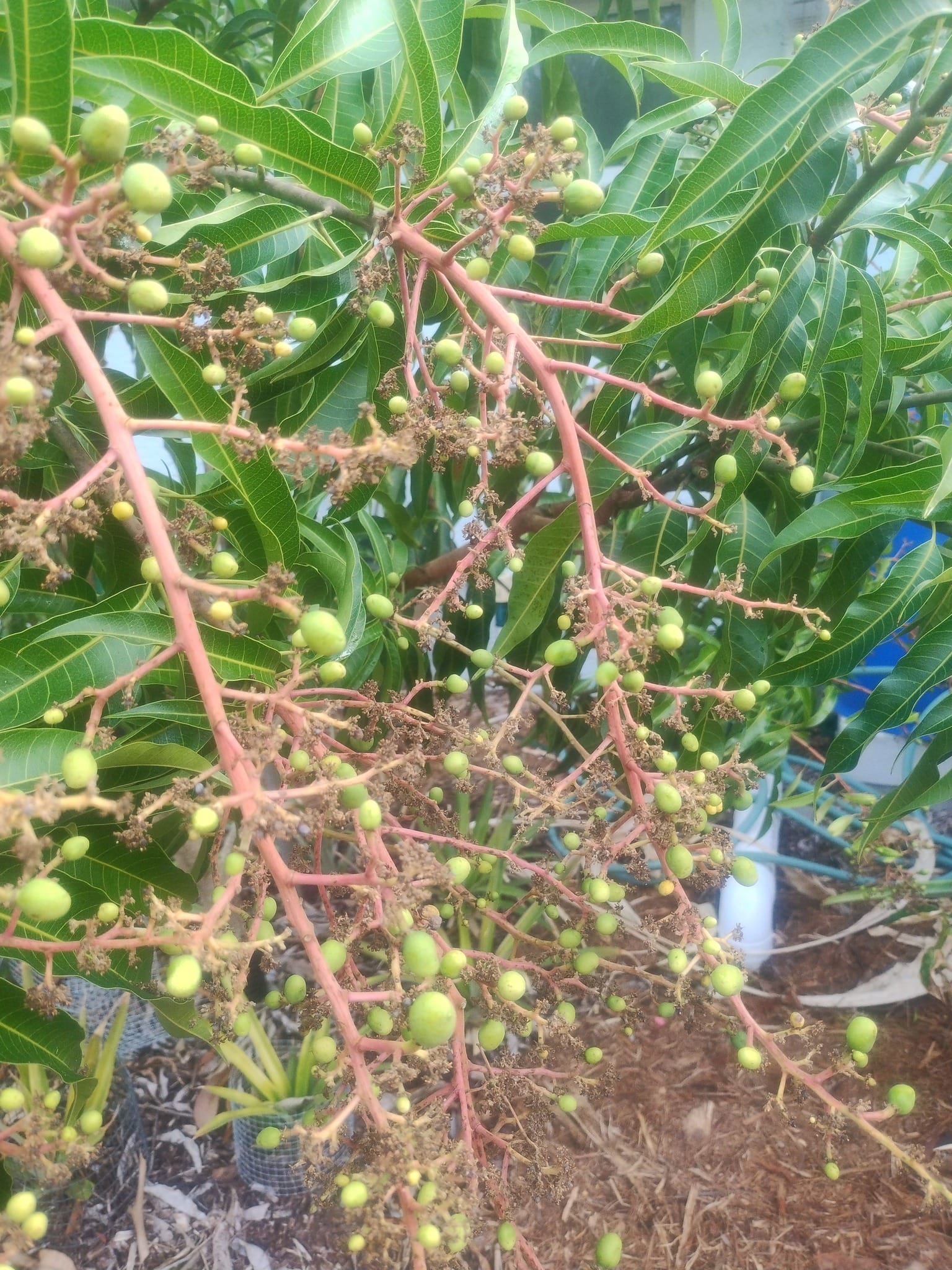
When do mangoes bloom in Florida
Mangoes usually bloom from late winter to early spring (December to April). The most common blooming occurs from January to March.
This is the short answer.
But there are some exceptions. Some varieties bloom earlier than the typical blooming season and some late varieties extend into April.
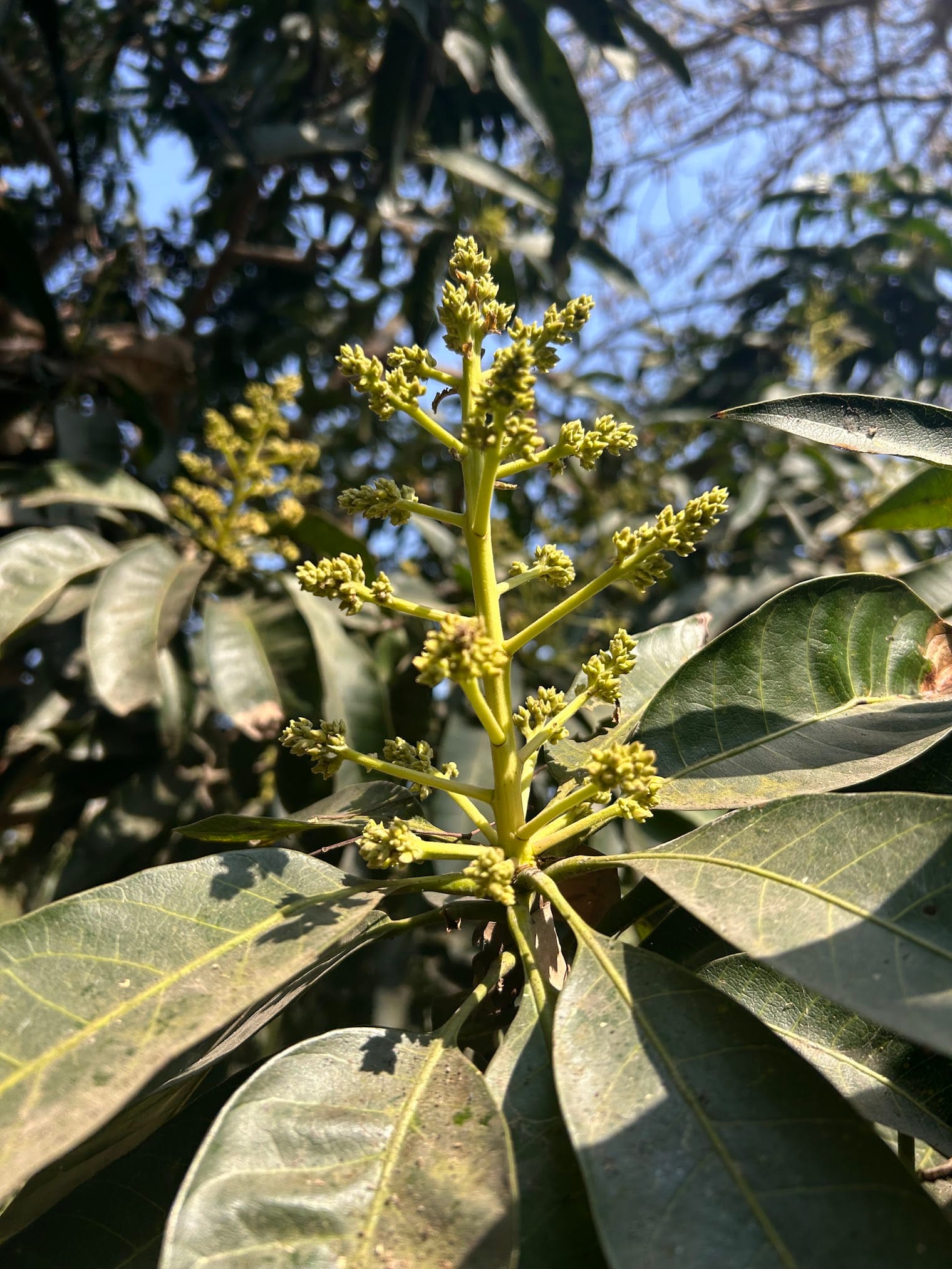
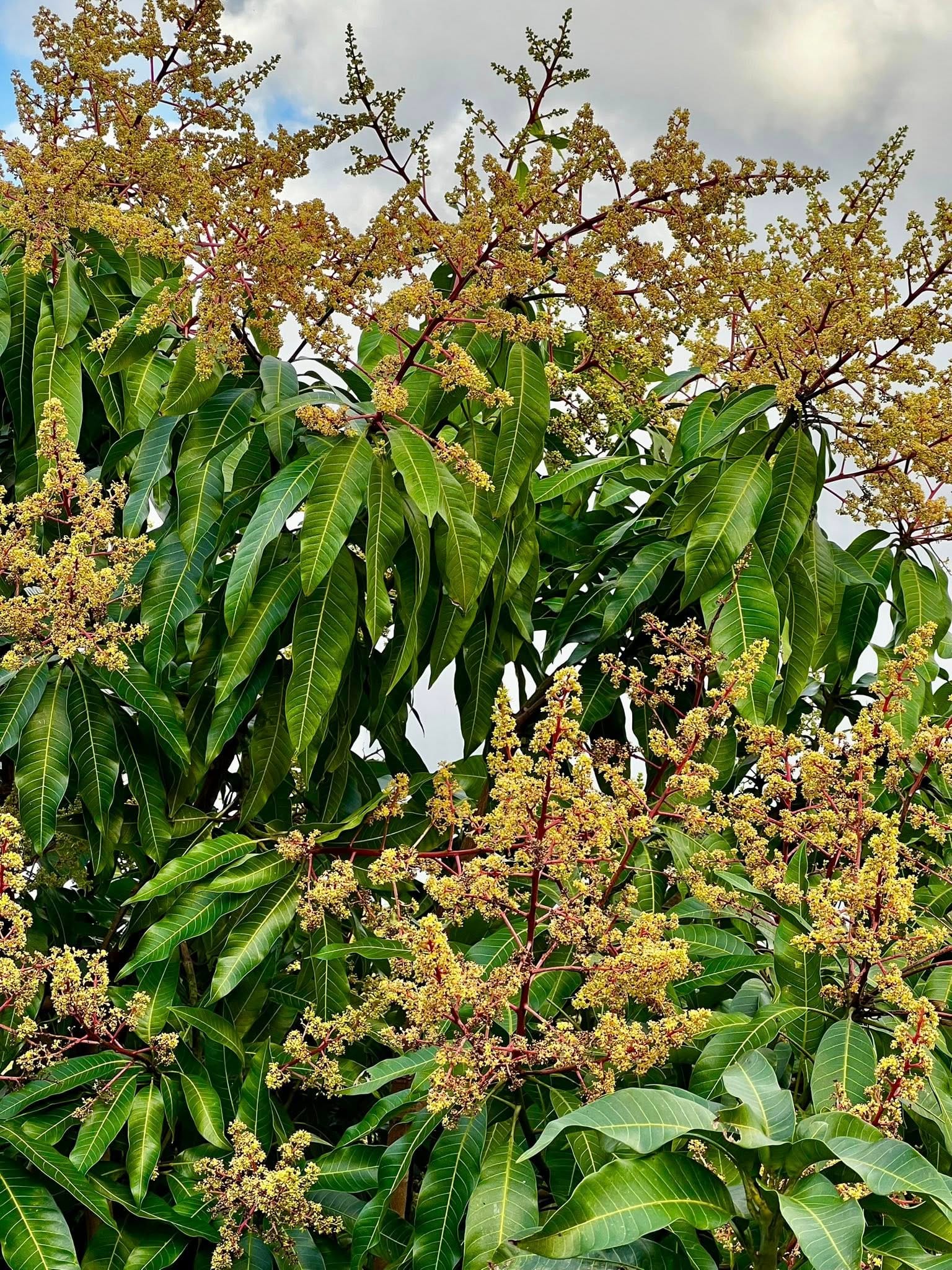
The above picture is from my orchard, and it bloomed in November (South Florida).
Planting guide for a Mango tree in Florida
Select the warmest place in your garden where it can get 8 hours of direct sunlight.
Tip: Avoid the north side of buildings or big trees.
Young trees are damaged when it's below 30°F; mature trees can tolerate brief dips to 25°F. I am saying this for the sake of North Florida gardeners.
If you are planning to grow multiple mango trees, then spacing is a major factor that you need to consider.
Spacing can be adjusted depending on your style of pruning a mango tree.
Make sure you are planting a mango tree at least 25-30 ft away from buildings/power lines. ( Also consider gas lines)
For two adjacent mango trees, give at least 12-15 feet of space. Unpruned trees can go really tall and wide at the same time.
Best planting time of mango trees in Florida
The Best planting time would be spring (March-May) when it's warm.
Planting instructions
Avoid areas that usually remain wet. You can plant in the native soil.
As a mango is a large tree, no need to put much attention on soil preparation while planting. Make sure the soil can drain water well.
You can start the plant in a container if you wish. But if possible, plant it in the ground as early as you can.
You can use large pots for dwarf varieties (20+ gallons).
Dig a hole twice as wide and the same depth as the container. (I am talking about the container you got from the nursery)
Use your native garden soil to fill the gap, and you are done. Water well after planting. Mulching is not necessary if you can kill the weeds on your own.
Do you know that you can actually grow Mango trees from seeds? But the first harvesting time is longer than nursery-bought grafting trees.
Watering
Water 2 to 3 times a week for the first three months. After that, you can reduce watering.
You won't believe but I have some large mango trees that I never watered after establishment. I am not telling you not to water your mango trees. Mango tree roots can go very deep inside the soil, and this is why they can get water from deep soil.
Watering your mango trees before the blooming season helps your mango tree to hold healthy blooms.
Note: When you see the blooms, reduce watering. It encourages fruit set.
I usually write a pruning guide at the end of the article. But mango trees need to be shaped when they're young. Let's start the pruning guide.
Pruning Guide
When to prune mango trees in Florida?
Prune just after harvesting is done. For young trees, harvest in the active growing season or the early growing season.
For fruit trees, you can actually make the fruit production double or more with proper pruning and shaping. Mango is not an exception.
The best rule of thumb is to clear the center of the tree. More air flow helps prevent pests and diseases. Also increases the amount of sun that penetrates the canopy. Cutting back branches also encourages new growth and more branches. Every cut should turn into 2-6 new branches from the cut.
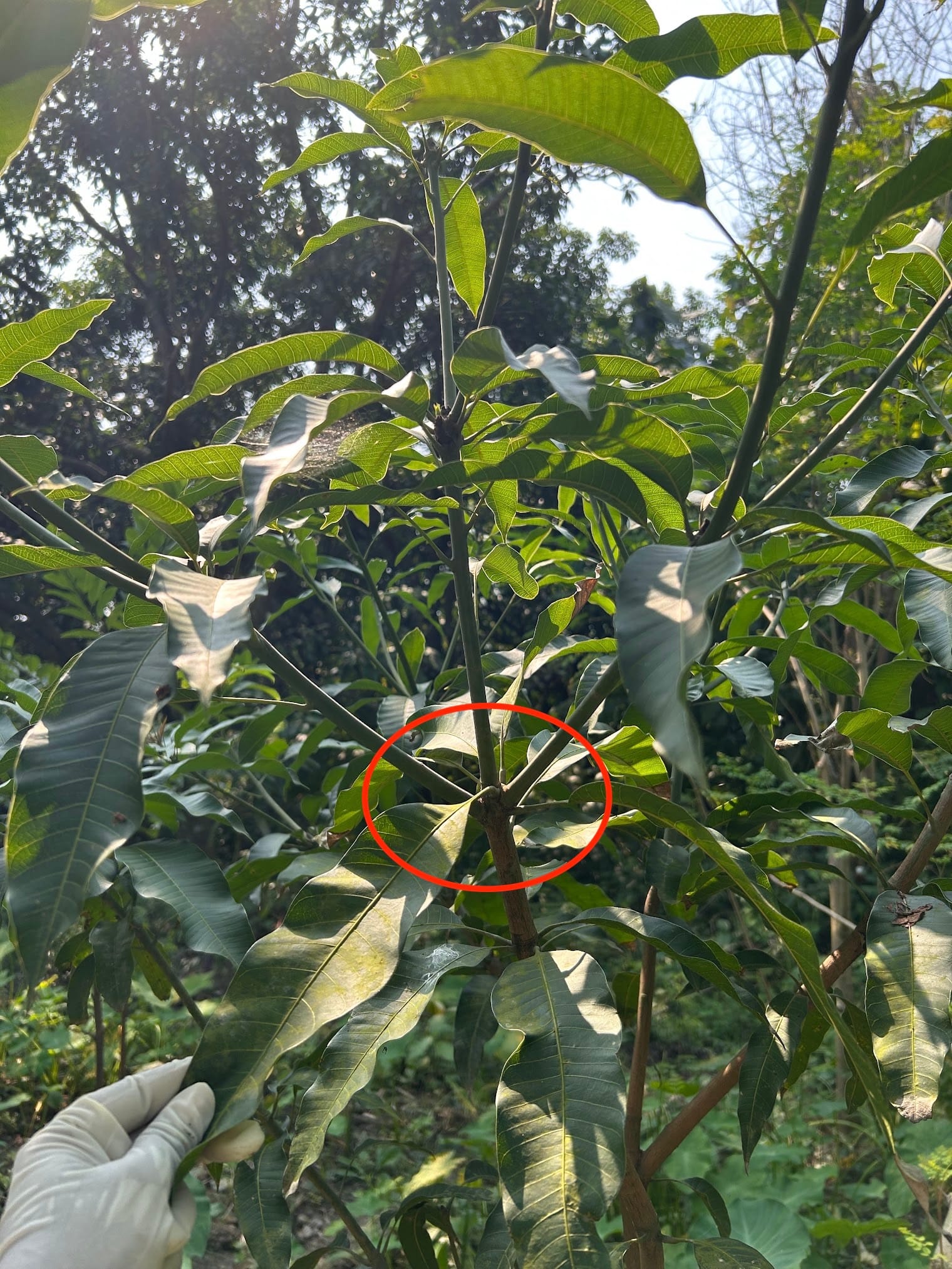
I pruned the red circular area (Check the above picture) in the spring, and it produced three branches from there.
Do this at the early stage (especially if the tree you bought from the nursery has only one straight stem).
I have done the same with other branches:
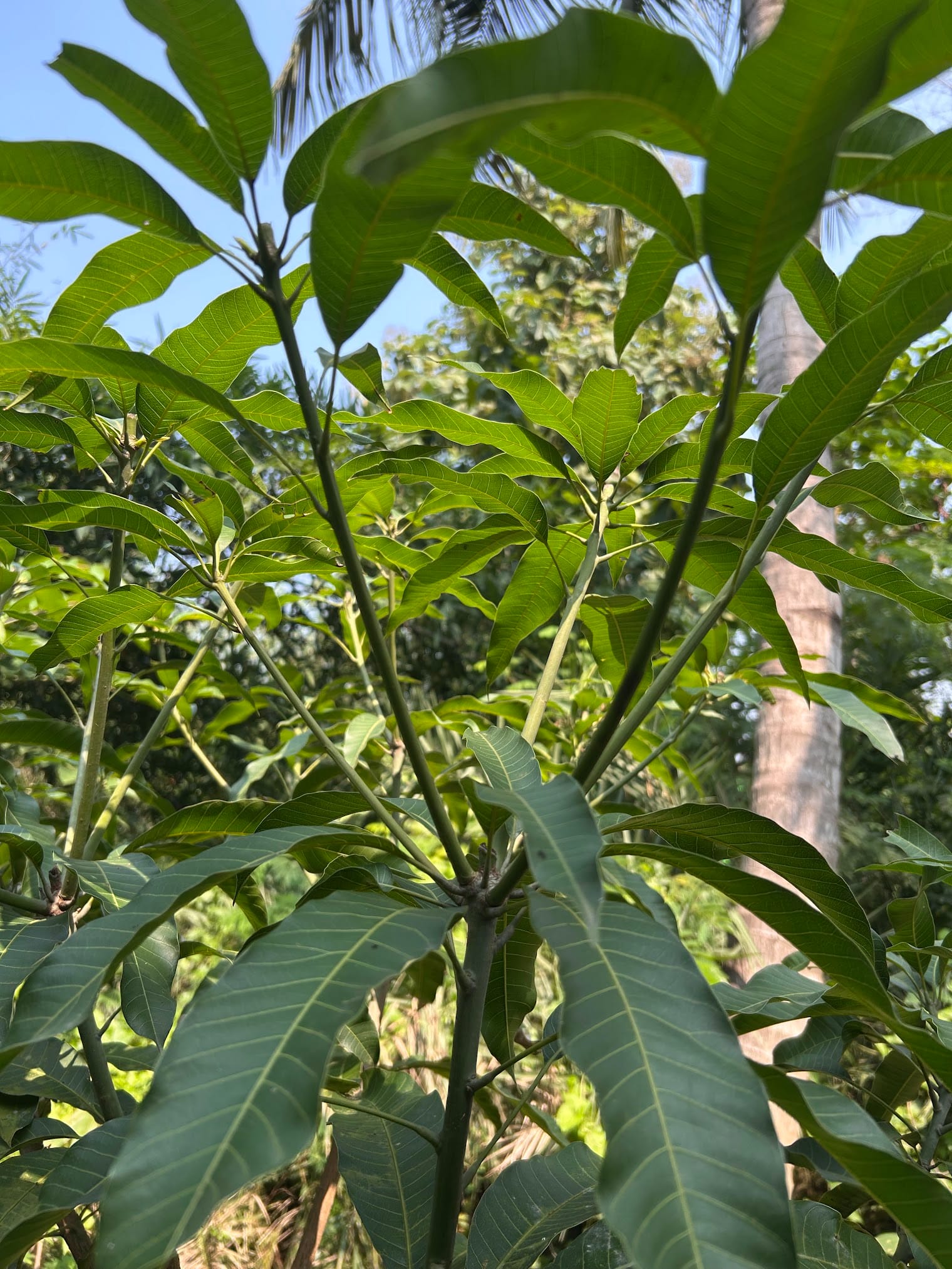
For established mango trees, prune after harvesting.
My father taught me this pruning technique, and this really works.
If your mango tree's shape is not good enough, you can make it bushier using this method. One of my mango trees was too bad, and I reshaped that just like this:
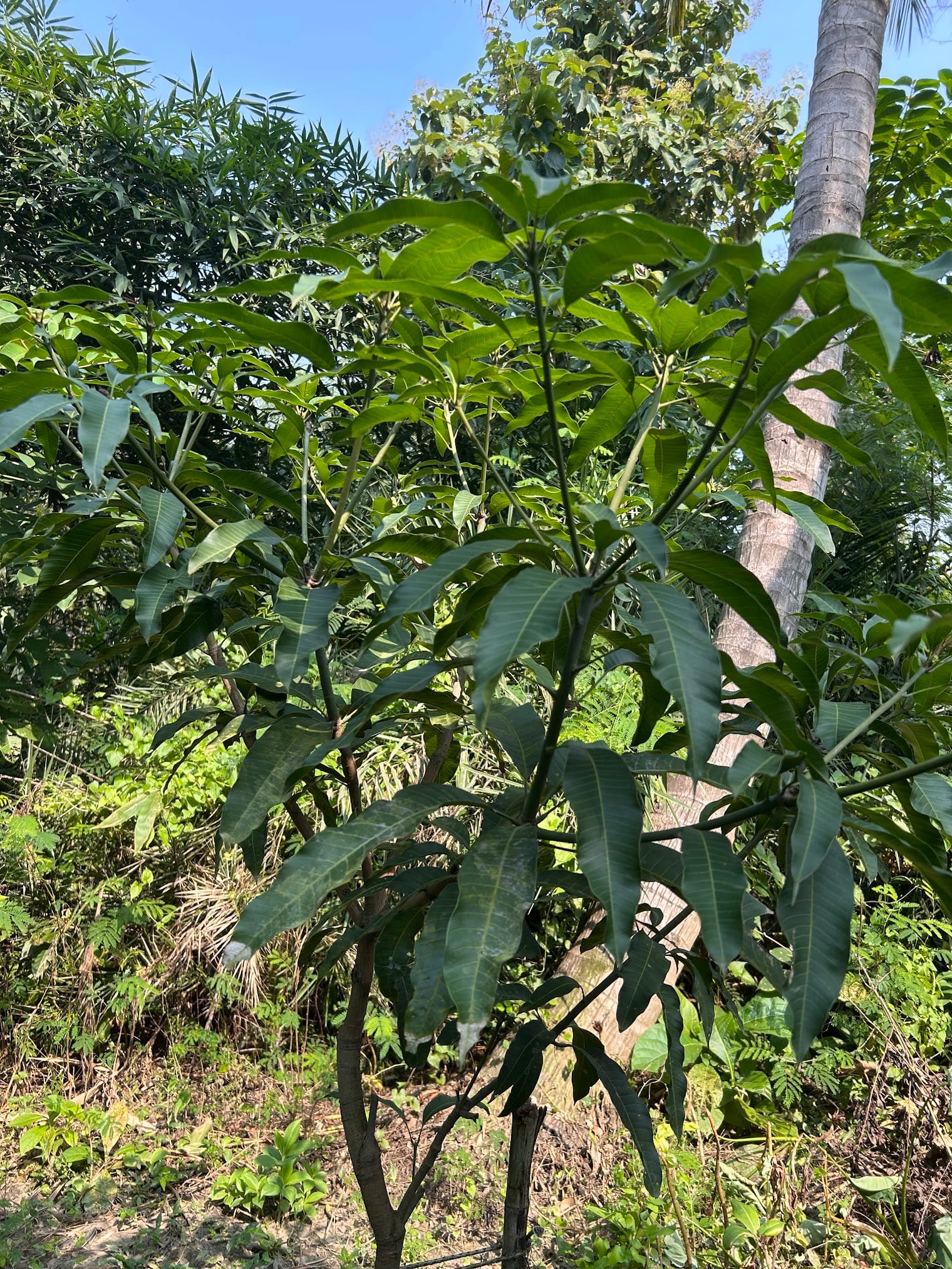
More branches mean more flowers you can expect.
If your tree is young and has only one straight vertical stem (already too high), I would keep none of that new growth. Cut it two growth rings from the ground, basically cutting it in half. Keep three of the branches that emerge from this growth, one in each direction. Then, trim each of them every 40 cm or so and retaining only the branches that are growing in the desired direction.
Never stop pruning Valencia Pride. If you are looking for a shade tree for the one you have just let it be, let it rip.
If you see flowers coming in the first or second year of planting, when your mango tree is still too young or weak, trim the flowers.
If it were me, I wouldn't let it fruit for at least two seasons, let it strengthen its roots first.
Fertilizer for mango trees
Here is my simple feeding plan for my mango trees:
- Pre-Flowering -> Phosphorus (P)
- Flowering -> Phosphorus (P), Potassium (K)
- Fruit Set -> Potassium (K), Calcium
- Fruit Development -> Potassium (K), Magnesium
- Mid-Season Growth -> Balanced (N-P-K)
- Post-Harvest -> Balanced or Low Nitrogen
The mango growers (especially those who are growing commercially) follow this same guide, but they do this using chemical foliar sprays and fertilizers.
I love to keep my garden organic and productive at the same time.
I figured out how to make all those nutrients at home easily. You can check this guide for a detailed explanation: Homemade fertilizers for fruit trees based on growth stage.
Winter care for mango trees
This section is not for South Florida gardeners.
Some part of Central Fl, and North Fl, often gets cold snaps. Mango trees don't do well in harsh colds.
When it's below 35°F, cover with frost cloth, blankets, or move pots indoors.
Mature trees can tolerate 32F.
Remember to cover before sunset and remove the next morning if temp. rises.
Check the weather report regularly in winter. When there is a chance of frost, water a day before frost.
The new growths are mostly affected by frost. So avoid pruning in fall or late fall. Stick to the pruning guide I mentioned earlier.
Reduce overall watering and fertilizing.
So my mango took a hard hit earlier this week. It got quite a bit colder than forecasted. I'm going to do what I can this weekend to protect. We are supposed to get down to around 30. Assuming my tree survives is the best course to prune out the dead tops after frost is off the table for the season. Many of us might start thinking that pruning is the best thing we can do. Look at the tree and here is my suggestion:
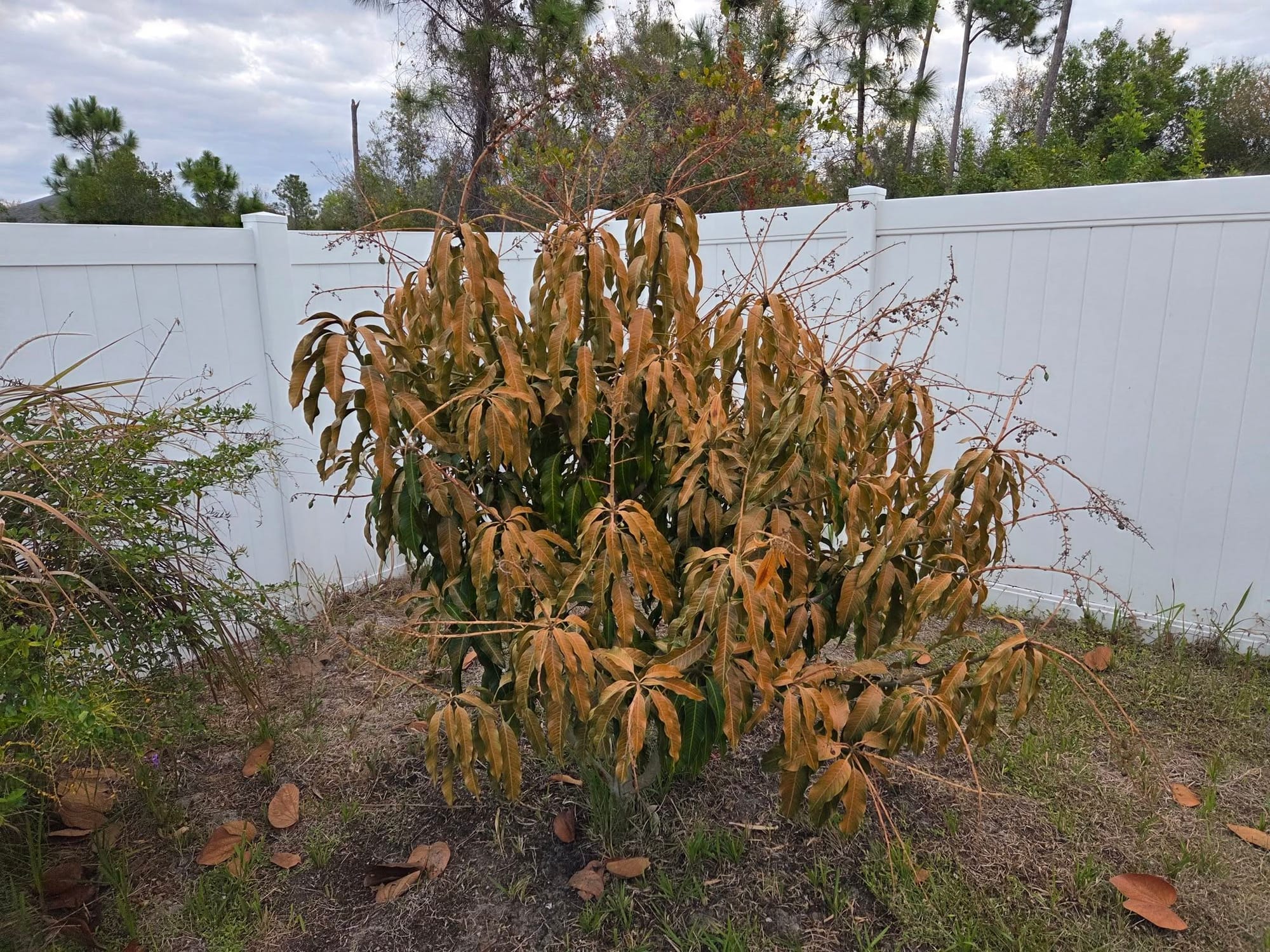
I wouldn't cut anything until the cooler weather subsides and you start to see new growth. My .02, the leaves may drop some branches may die. Not likely all of them will. I'd focus on protecting the trunk and graft site.
Pests and diseases of Mango trees
There is a pest issue that you should ignore.
Start with the easy one: ( I will keep adding/updating new pests and diseases in this list once I find them)
Sri Lanka Weevil
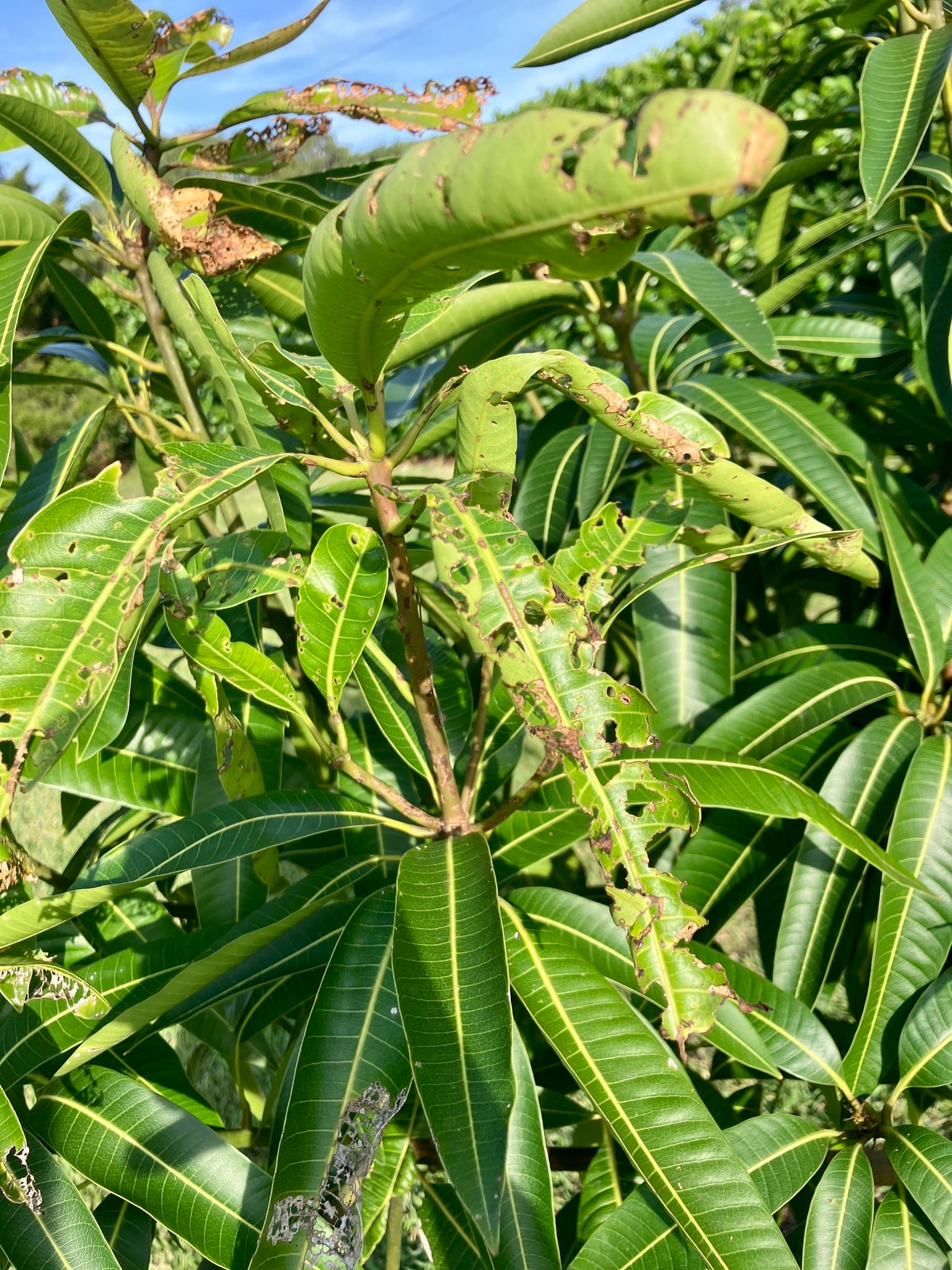
I wouldn't worry too much about it. We're all getting those, and it's not going to hurt your tree.
You're going to lose some leaves, but the tree will still produce. Spraying toxic chemicals on it isn't a good idea if you're eating the fruit.
If your leaves look like this, go outside tonight with a flashlight and a container of soapy solution and shake them in the solution. Heard Bugs-B-Gon sprinkled on soil around the tree and watered in will kill the young ones underground that feed on the roots.
Regular Scale

This is scale. Remove the scales manually. Ants usually carry and protect them, and they are commonly found on the underside of the leaves. Scales multiply along the leaf veins and suck sap, creating white spots on the leaves.
Control the ants first. Apply Dursban, then use another insecticide specifically for scale, such as Alika (please verify online for local availability and recommendations).
To get rid of ants, read: How to get rid of ants
Here is a short and simple remedy that I tried and worked:
"Horticultural oil, neem oil, and stylet. All good stuff to suffocate the scale. Has to be done before sunup or as the sun goes down. No sulphur spraying within 3 weeks of an oil-based treatment. Baiting ants away from the tree could work. Sevin granules and standard ant/fire ant bait if you aren’t trying to be organic."
The picture you are seeing is a regular old mango scale, not the new white mango scale.
It can be treated with stylet oil, but the main thing is to stop fertilizing with nitrogen. They are generally not a problem if your tree is not nitrogen fertilized. Nitrogen fertilizers are generally problematic for mangoes and generally enhance pest populations.
White Scale
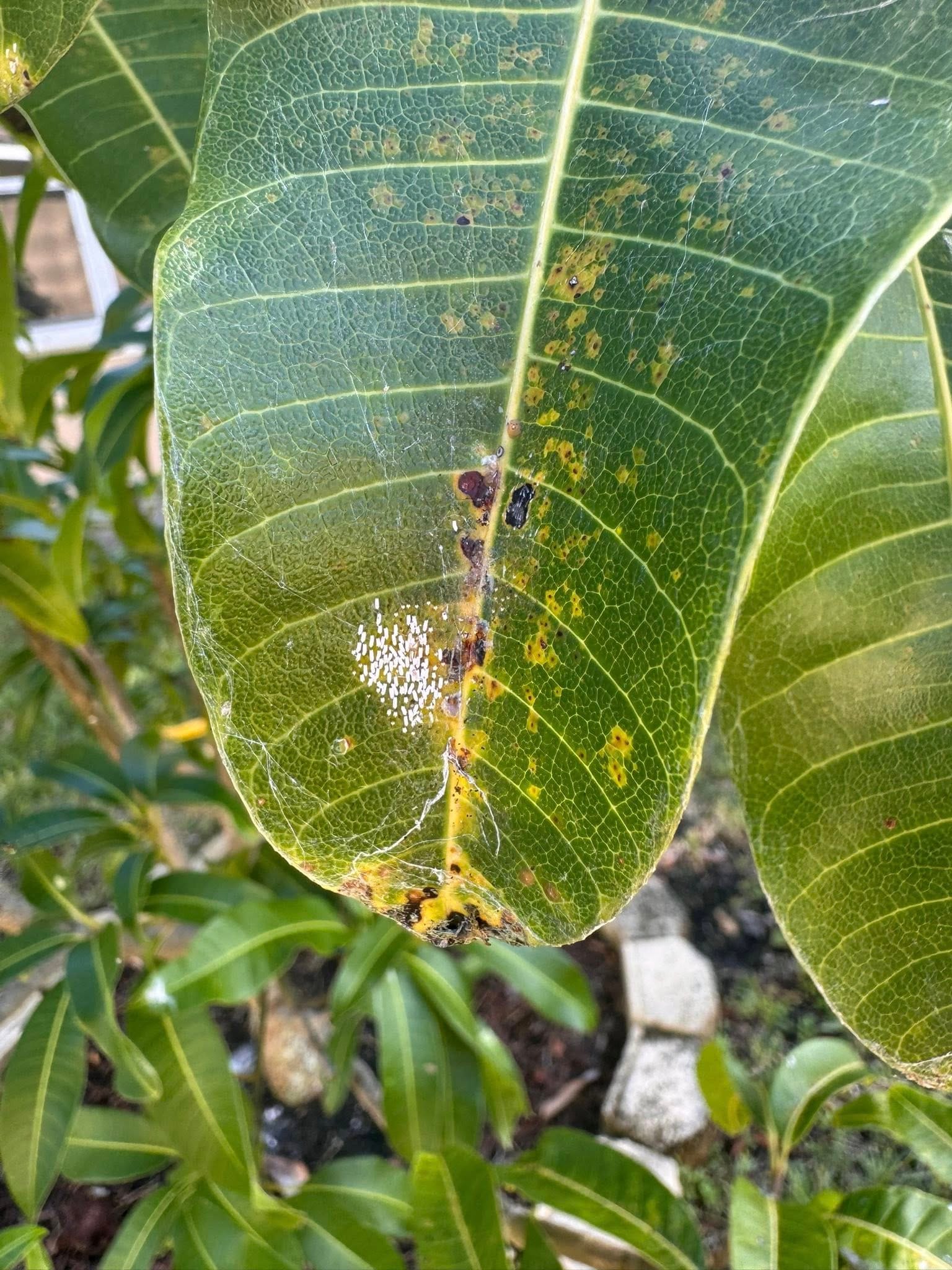
This is a white scale.
I have written a detailed guideline for this issue: White scale on mango leaf
I suggest you read that article if you have time.
You can knock them back by coating the tree with stylet oil a couple of times a year.
5 tablespoons per gallon. Best on humid nights, so it stays wet longer.
Don't use during hot, sunny weather. It's far more gentle on trees than other kinds of oil sprays, but still best to be careful.
Also, no nitrogen fertilizer. That makes sucking insects grow and reproduce faster.
Sooty mold
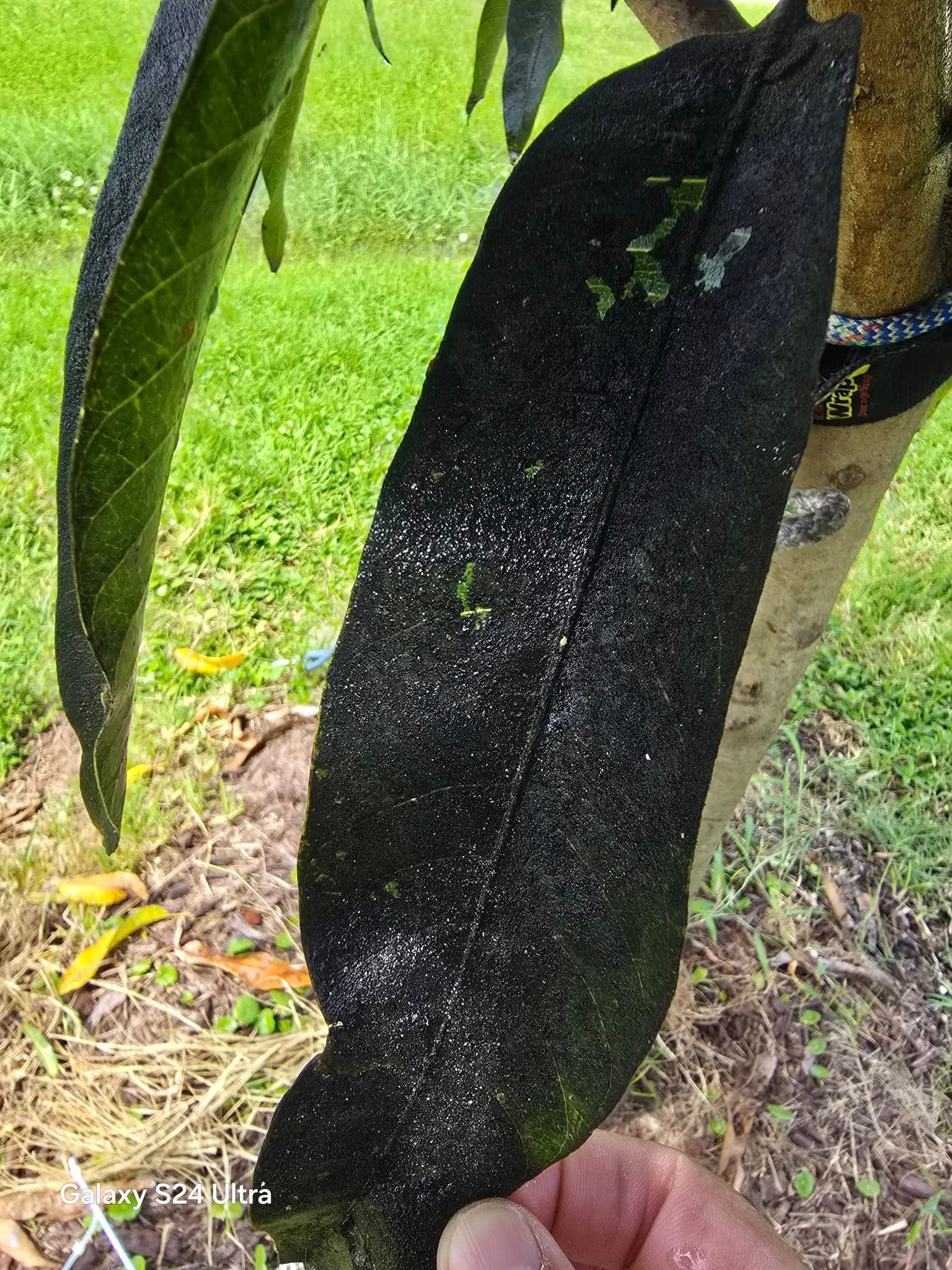
If you are seeing this type of black coating on your mango leaves, then it indicates that your mango leaves were affected by any of these: mealybugs, whiteflies, aphids, or white scales.
When the attack leaves, they leave honeydew and black fungus like this, which grows on the honeydew.
You can read this guide to know how to treat sooty mold: Get rid of sooty mold