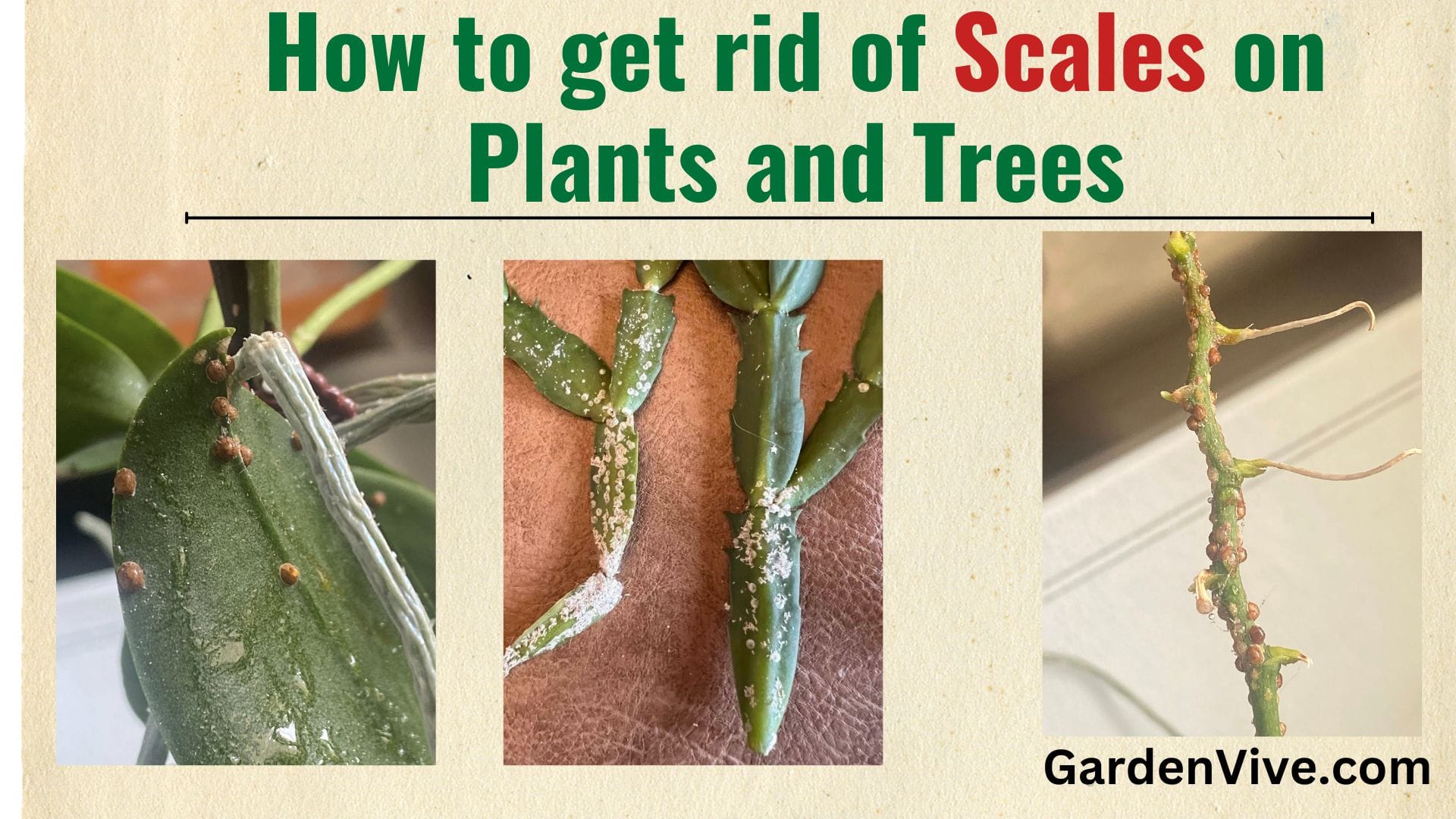
If you compare scales with other pests and bugs on plants and trees, you might witness slower destruction from scales. Slower, yet they are highly destructive to our plants and trees.
In this article, I will guide you on how to get rid of scales on plants and trees.
Note: Do not go for any treatment for scales unless you are sure that the scales are infecting your plant. So it's important to identify the pest. There are many types of scales. I have captured (and shared here) different types of scale pictures so that you can identify them easily.
In this article, I am covering these:
- Type of scales with pictures
- How do they damage our plants
- How to get rid of scales (treatments for scale-infected plants and trees)
If you are looking for only the remedies, just skip to the 3rd section of this article. But believe me, you will learn a lot about scales, if you read the complete article. And it will be interesting.
Type of scales
There are two types of scales that attack plants.
- Armored Scales (Also known as hard scales)
- Soft Scales
There are a few other scales, and I will talk about them later.
Armored Scales (Hard Scale)
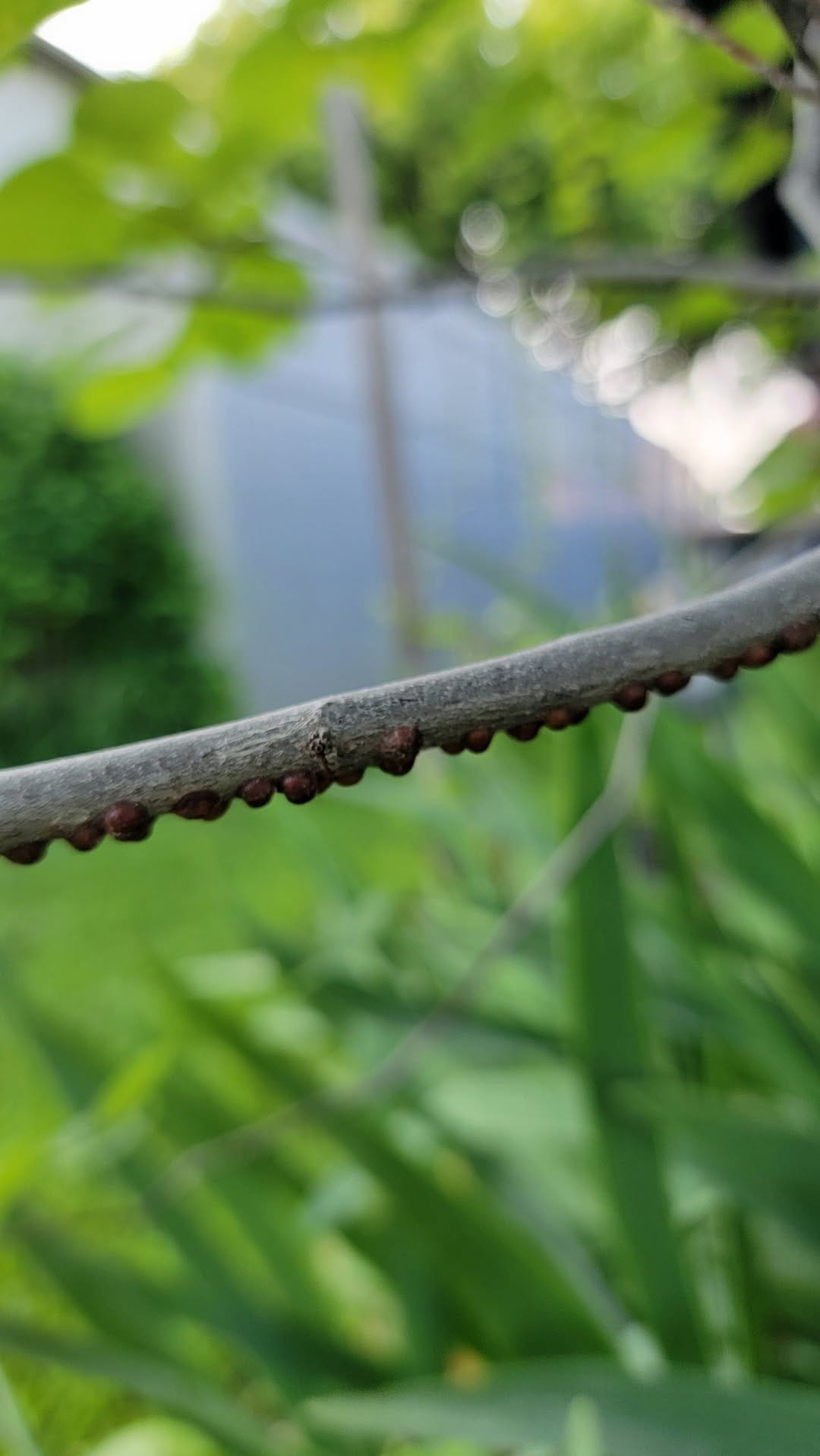
As the name says, it has a hard protective covering shell. This is actually a wax-protein shell that acts as armor over themselves.
When they are in their nymph phase (baby scales), they settle down to feed. At this stage, they lose their legs. This is when the shield is created over them. The shield gets harder and harder.
As they can't move, the shield acts as a protector.
How to identify them?
If you find no sticky substance from the infected area, they are armored scales or hard scales. Hard scales do not excrete honeydew.
Interesting fact that nobody talks about: The shell is not attached to their body. You can flip the shell and find their soft body underneath.
This question was on my mind for a long time. If they can't move, how do they reproduce?
Female hard scales usually settle down and lose eggs, but when the male hard scales enter their adulthood, they transform into two-winged insects (looks like gnats)
The only mission for the male scales before death is to find a female for reproduction.
Note: Female hard scales can also clone without a male. The eggs do not need to be fertilized by the male. This is known as asexual reproduction.
Soft Scales
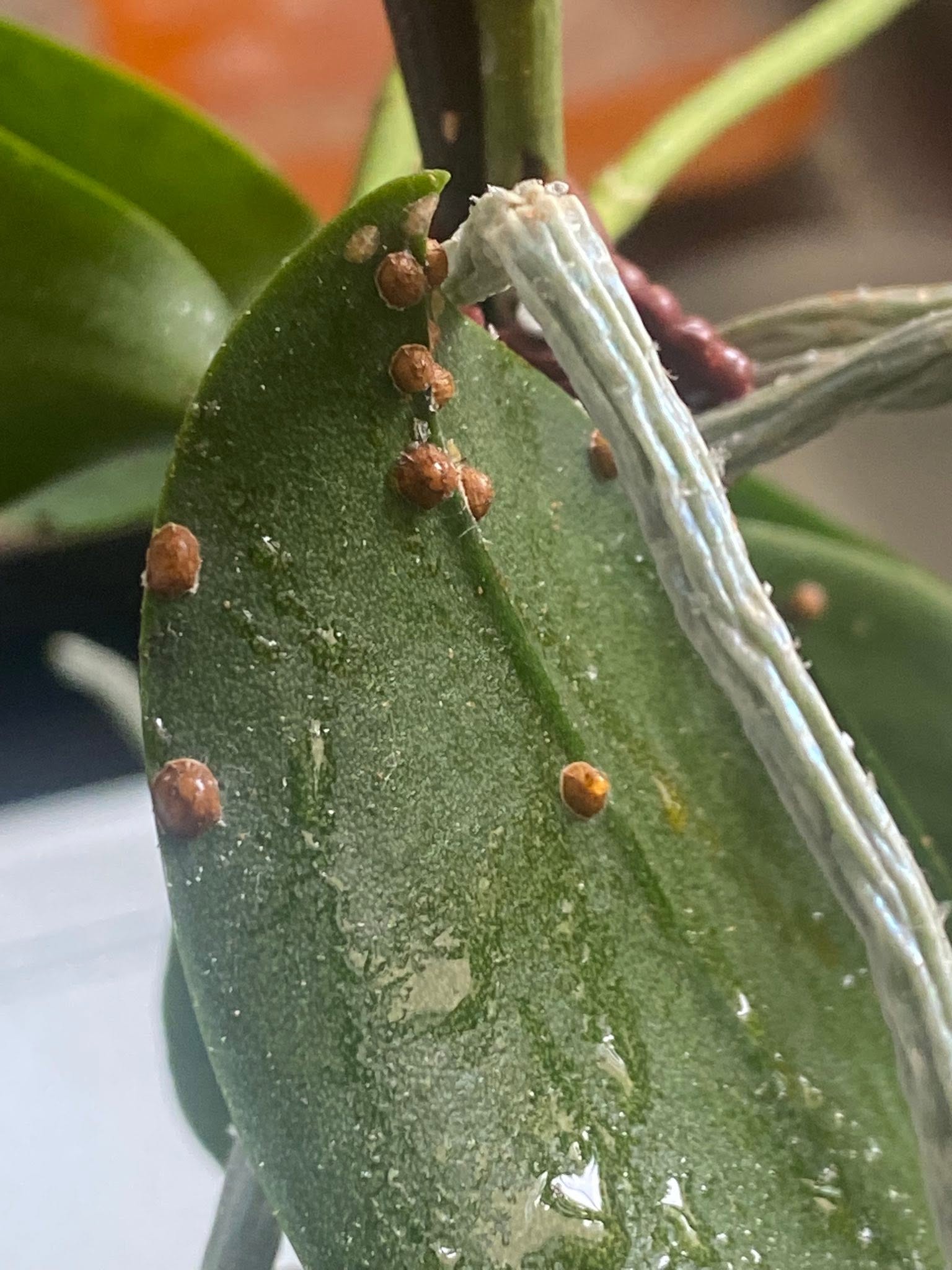
Soft Scales are easy to identify. They excrete honeydew. You can see sticky fluid on the infected area. (As you can see in the above picture)
If you compare the size, soft scales are generally larger. They don't have a hard shell, but still, they have a waxy protective coating on them.
Soft scales do not usually move once they are settled to feed. But there are some soft scales that can retain their legs if needed. (Usually, if they find a better feeding spot).
Note: Due to the honeydew, it can develop sooty mold fungus or attract ants.
I have separate dedicated articles on how to get rid of ants and sooty mold. (You can read later)
Cottony cushion scale
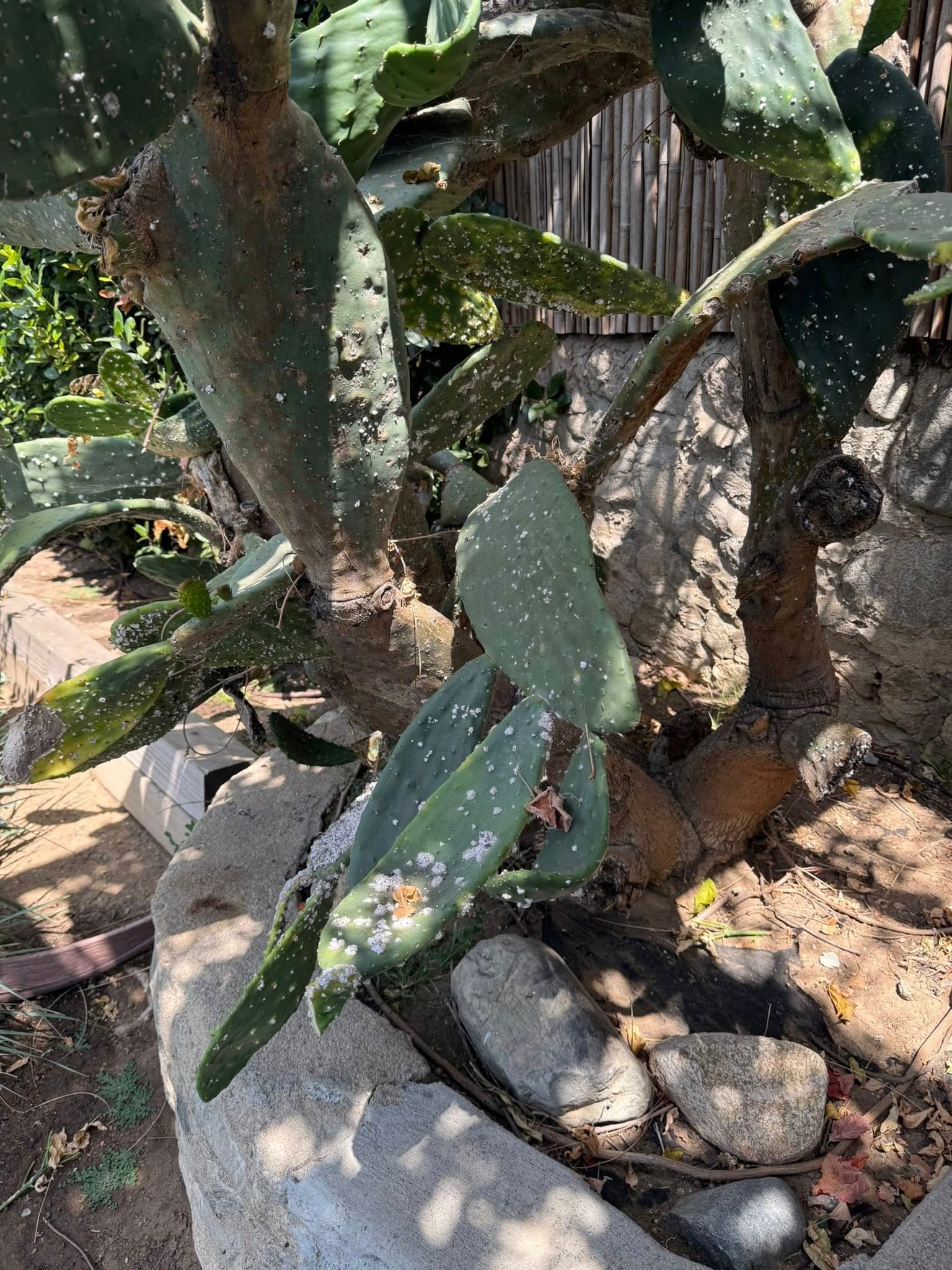
A cotton-like egg sac is attached to the female scales here. You can see in the picture.
How to get rid of scales
The hard scales are harder to handle due to their shell. Normal bug sprays often fail to kill them.
I tried a lot of bug sprays just to see how effective they are on scales.
I usually follow two different remedies - One for small outbreaks and another for larger infestations.
If you see scale infection on a small portion of your plant or only on 1 or 2 branches of your tree, you can prune those branches.
Once you prune, spray alcohol on the whole plant. (for small indoor plants)
If you don't wanna prune, that's fine. Dip a cotton swab or microfiber in alcohol and dab directly on the scales.
I find 70% isopropyl rubbing alcohol works perfectly on scales. It works best on soft scales. (I found it to be effective on hard scales too)
Alcohol dissolves their protective coating or shells and kills them.
You can also use a toothbrush and scrape the scale-infested branches. I do this on tree barks...
For hard scales, go for any horticultural oil. Spray on the scales. The oil coats the scale's shell, and they can't breathe. Eventually, the scales die. ( Dilute the oil with water before you spray.)
Do not spray when the sun is at its peak or when the temperature is above 90°F (32°C).
You can also spray neem oil. But horticultural oil works faster than neem oil.
Wait for 1 week after the first spray. If you see any moving creatures (tiny), spray neem oil again. Do not leave any spot on the tree or plant. (Even the underneath of the leaves).
One request from my end: Do not spray anything in the blooming season. It may kill the pollinators like butterflies and bees.
Mealybugs are also a specific type of unarmored scale that can move.
You can check how to get rid of mealybugs here: How to get rid of mealybugs on plants - only tested methods
Yes, there are insecticides that can be applied to the soil, and your large tree gonna absorb that. It will kill the scales. But I never suggest anything like this on my website. We do gardening to enjoy the beauty of nature, not to destroy the wildlife.
I created this blog to help hobby gardeners like me. If you learned something new today, please subscribe to this site to get unique gardening tips. Your subscription really matters to me.