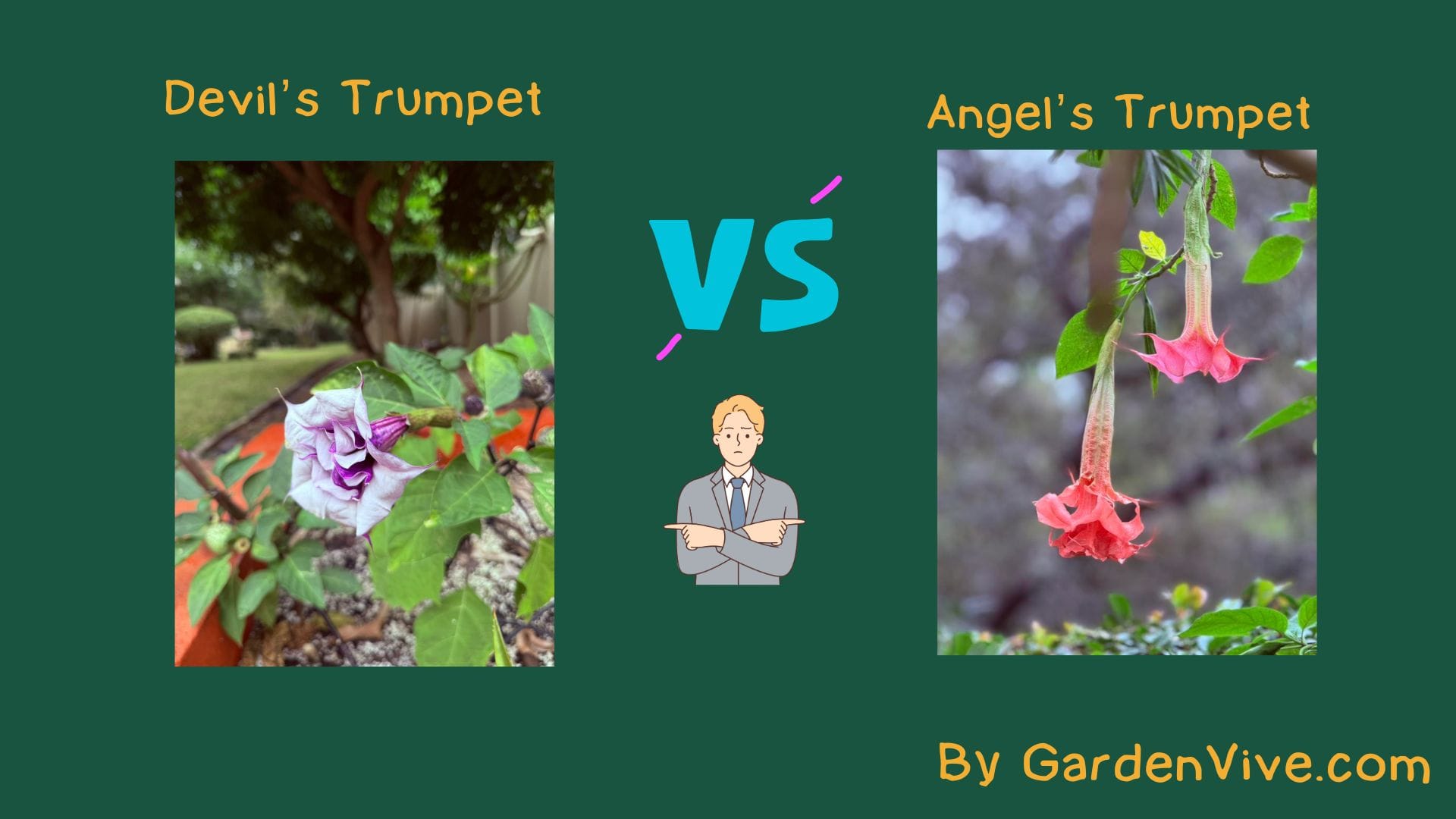
Both of these flowers originated in Central and South America, but they eventually spread globally as ornamentals. They are from the same family - Solanaceae (nightshades). This is why people find it confusing to distinguish Devil’s Trumpet from Angel’s Trumpet. In this article, I will make it easier for you to find the differences between Devil’s Trumpet and Angel’s Trumpet.
I will cover these in this article:
- Devil’s Trumpet vs Angel’s Trumpet - Differences with pictures and identifications
- Similarity - Why the confusion
Note for those who don't have enough time to read this complete article:
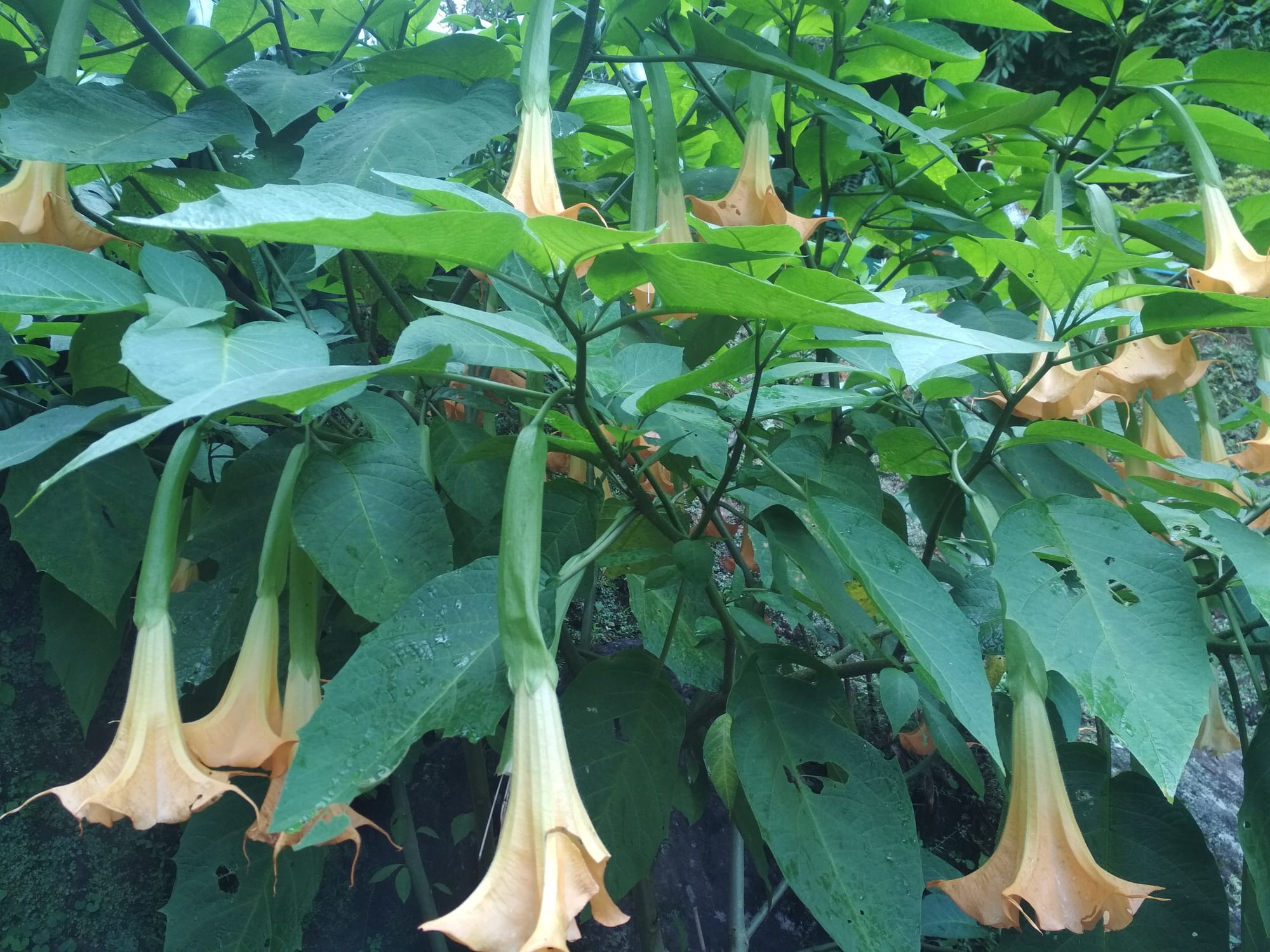
If you see the flower blooming downward, it's Angel's trumpet. If not, it's Devil's trumpet.
Devil's Trumpet blooms pointing upward, and Angel's Trumpet flower hangs downward. - This is the main difference by which you can say they are not the same, just by looking at the flowers.
Differences between Devil's Trumpet and Angel's Trumpet
Now let's see the differences:
| Feature | Angel's Trumpet (Brugmansia) |
Devil's Trumpet (Datura) |
|---|---|---|
| Plant structure | Woody shrub or small tree (6–30 ft / 2–9 m tall); thick, brown, rough bark; evergreen or semi-evergreen in warmer regions | Herbaceous annual or tender perennial (2–6 ft / 0.6–1.8 m tall); soft green stems; dies to ground in winter |
| Blooming season | Year-round in frost-free climates; main flush from mid-summer to late fall in cooler zones | Summer to first frost (typically June–October in temperate climates); blooms heavily in hot weather |
| Flowers | Large (6–20 in / 15–50 cm long), pendulous (hanging downward), single or double; colors: white, pink, yellow, peach, red; strongly fragrant at night | Medium-large (4–8 in / 10–20 cm long), erect (pointing upward); usually single; colors: white, purple, yellow; strongly fragrant at night |
| Leaves | Large (6–12 in / 15–30 cm), oval to elongated, smooth edges or slightly toothed, velvety texture, alternate, no strong odor when crushed | Large (4–10 in / 10–25 cm), broadly ovate, coarsely toothed or lobed, grayish-green, strong unpleasant odor when crushed |
| Fruit / Seeds | Long, smooth, pendulous pods (6–12 in), no spines; splits open when mature; seeds large, corky, brown | Round or oval spiny capsules (“thorn apples”), covered in sharp spines; burst open explosively; seeds small, kidney-shaped, black or brown |
| Growth habit | Slow to establish; perennial in USDA zones 9–11; grown as container plant or die-back perennial elsewhere; does not self-seed aggressively | Fast-growing; behaves as annual in most climates; self-seeds prolifically and can become weedy/invasive |
I know, that's a lot of data in a single table. I tried my best to accumulate every difference in a little space.
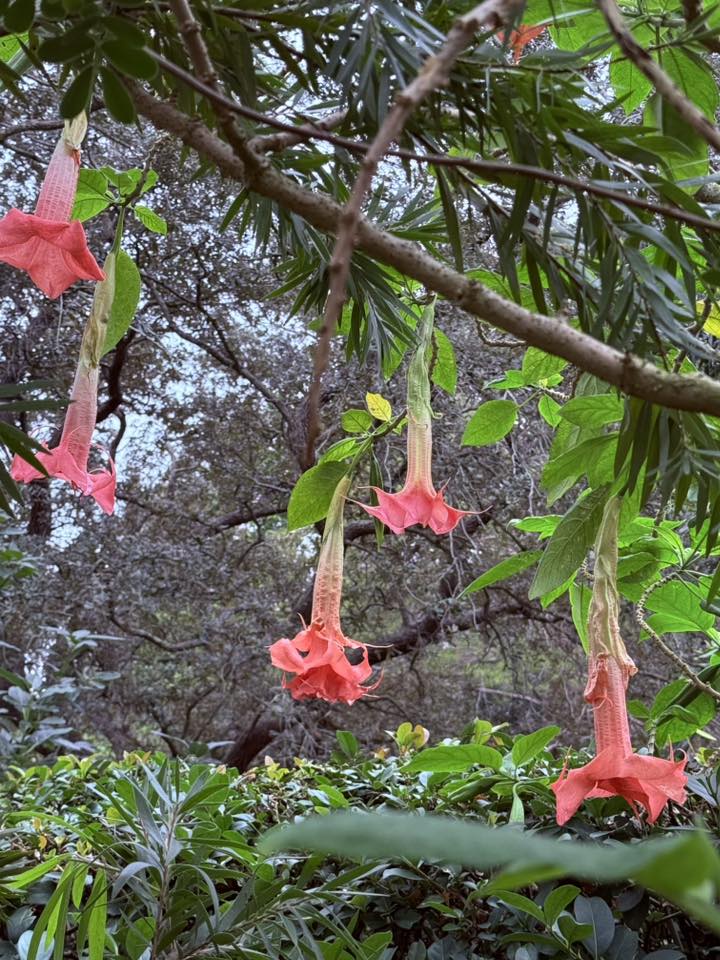
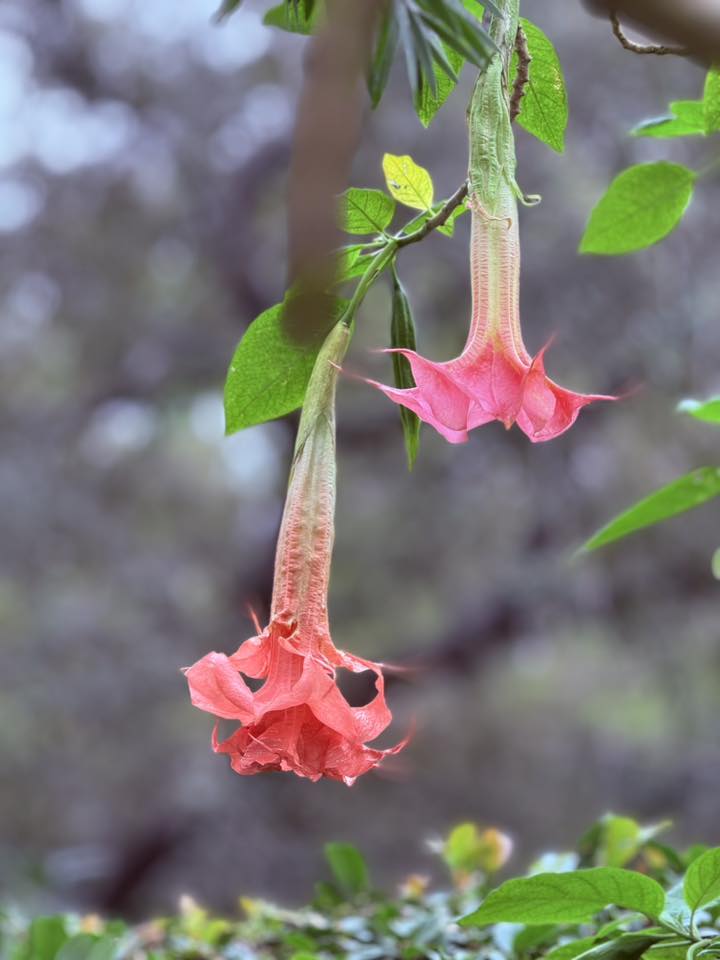
This is Angel's Trumpet picture:
This is Devil's Trumpet Picture
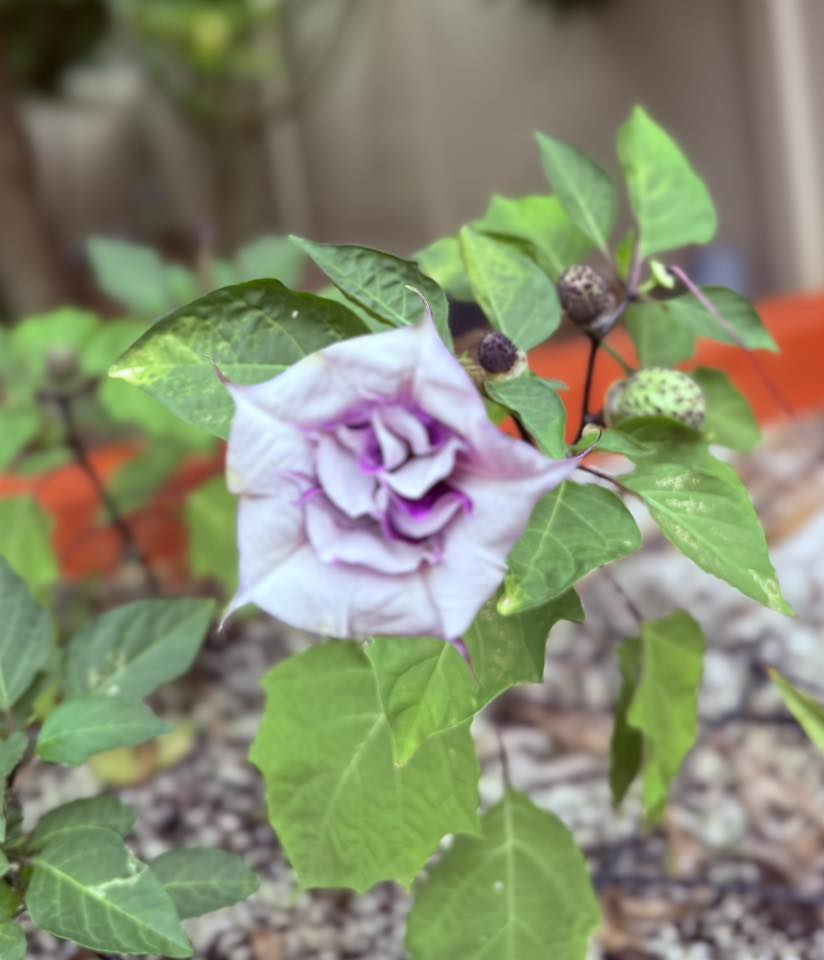
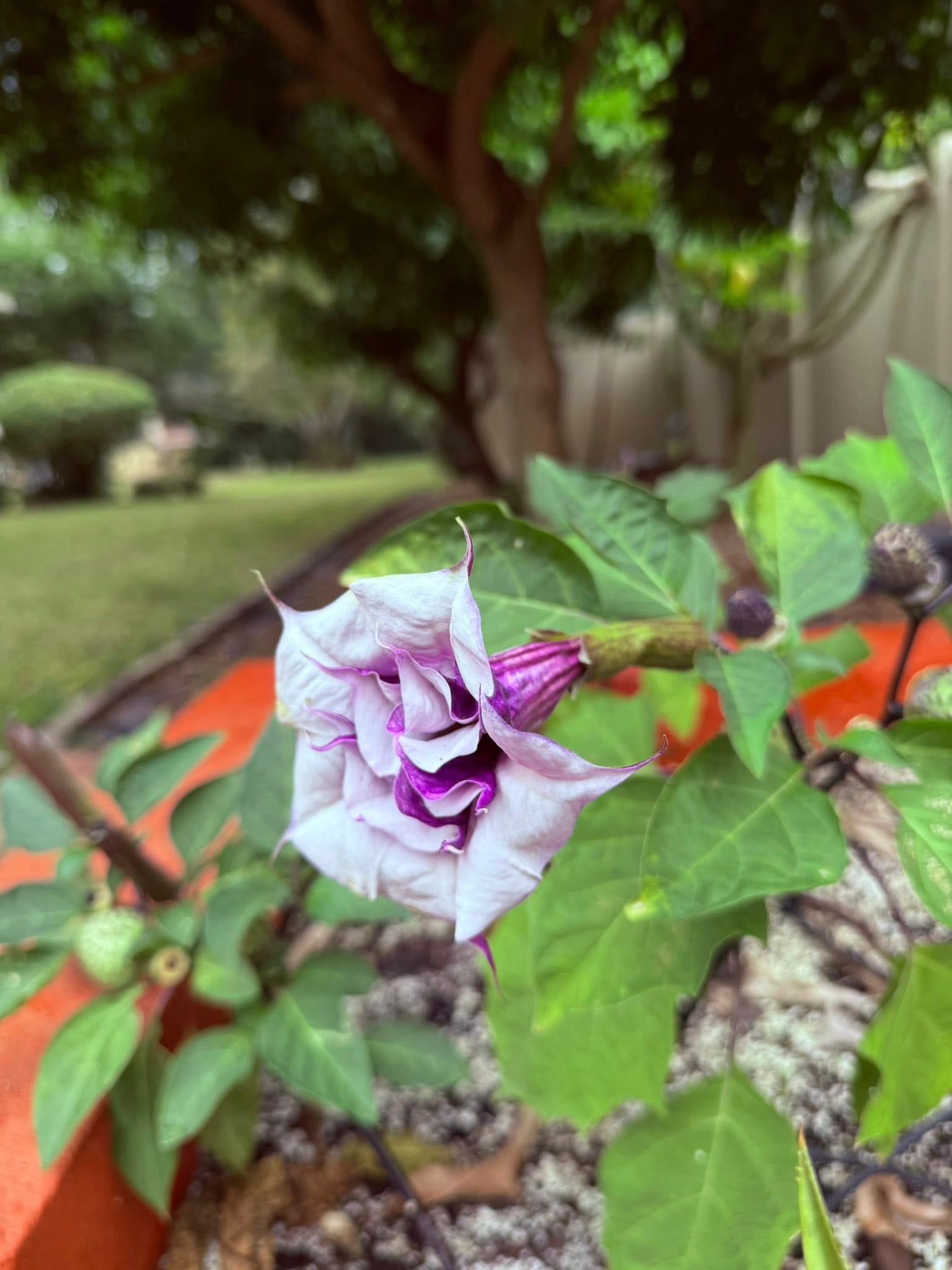
Do not try to play with the devil's trumpet's seed pod or seeds. If you mistakenly ingest the seeds, you might face severe delirium, hallucinations, and even death.
Similarity between Angel's Trumpet and Devil's Trumpet
They are both from the same botanical family - Solanaceae (nightshade). They both are fragrant at night.
But I have seen a specific datura species that is less fragrant (the white one).
Angel's Trumpet and Devil's Trumpet are both extremely poisonous.
Their growing conditions are exactly the same. (As this is not a growing or caring guide, I will not talk about the growing conditions here)
They share the same deadly family, the same intoxicating night scent, and the same reputation as two of the most beautiful — and dangerous — plants in the garden. Keep your children away from these two.