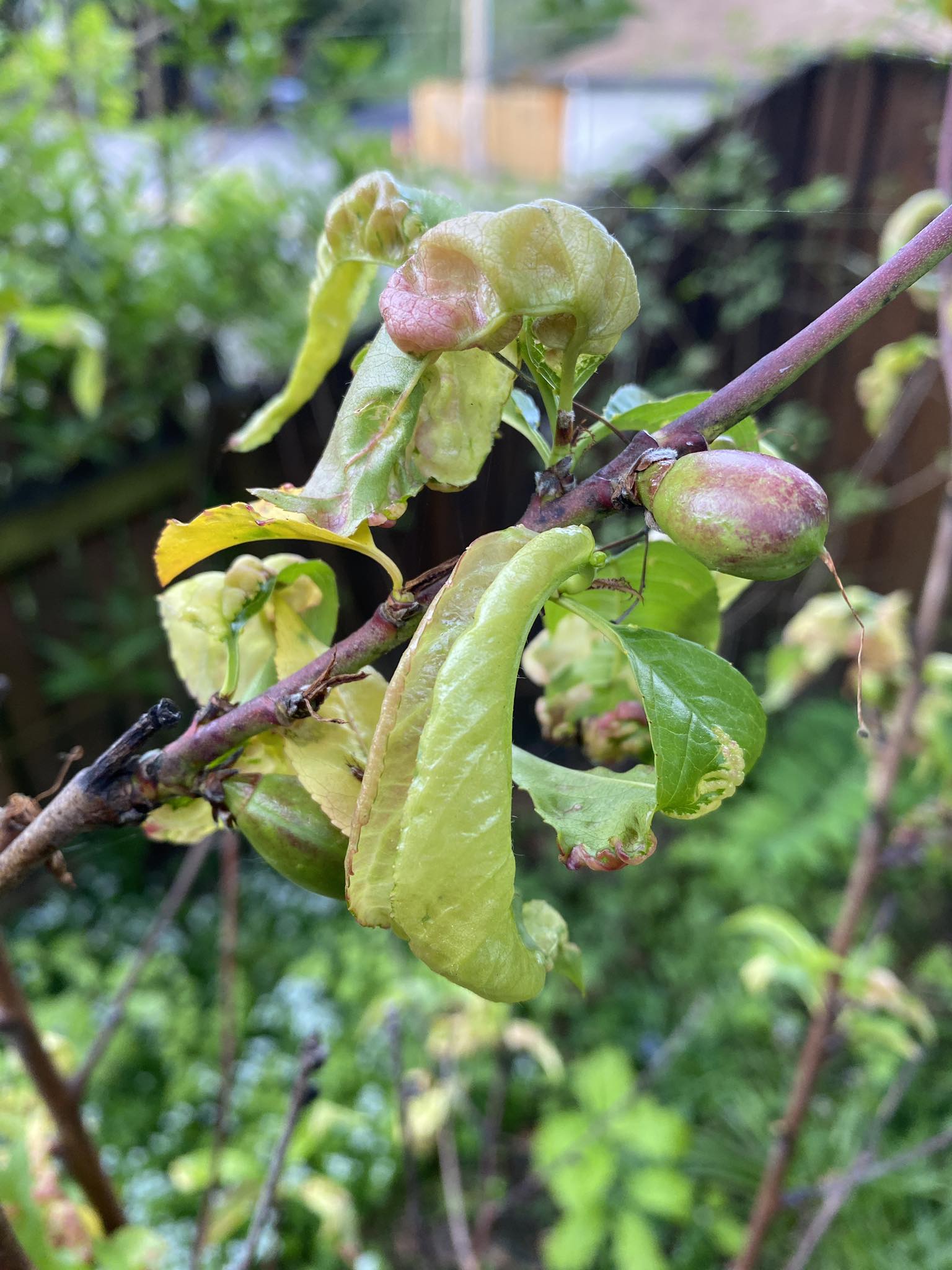
Peach leaf curl disease is the most common issue that you are gonna face with your peach tree. Nectarine trees also face the same problem. In this article, I will explain why your peach tree leaves are curling and what to do to treat it.
Those who don't have enough time to read this full article, this is for you:
Need to spray with copper fungicide and pick off infected leaves. Spray with dormant oil spray in winter when tree is dormant. You'll have stay diligent with spraying every year.
But there are some other suggestions that I will tell.
At first, you need to know why our peach tree leaves are curling.
Why are our peach tree leaves curling?
It is caused by our wet spring weather.
This is a fungal disease caused by the pathogen Taphrina deformans.
The fungus stays alive in the bark and buds of the peach tree during winter. The beginning of the spring comes with cool and wet weather at the same time.
This is the moment when rain carries the spores into the new leaf buds.
In spring, the leaves start growing, and the fungus infects the new leaves.
You might be thinking, why the hell are leaves curling due to this fungus.
This fungus infection causes the cells to grow unevenly and too fast. (Faster than you might be thinking)
This is why the leaves become curly and wrinkled.
Now, move to the treatment part.
How to treat peach leaf curl?
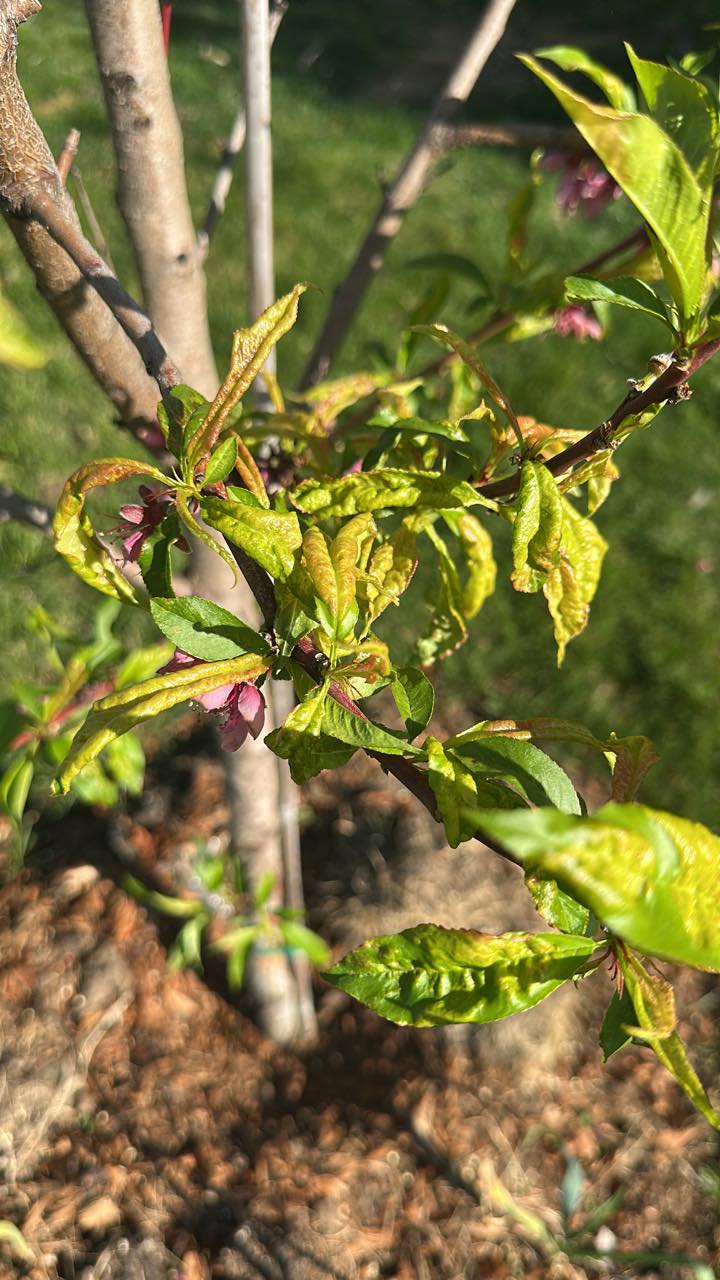
Once the fungus starts spreading and infecting the new leaves, you can't treat the infected leaves.
You have to start the treatment before the fungus starts infecting.
I used to cover my tree with clear plastic for the whole months of January and February.
I still got peach leaf curl, but much less. The part of the tree that was under the eaves of the house did not have curl, but the more exposed areas of the tree did. I did not spray any chemicals in my yard.
Every year, I very carefully hand-picked the curled leaves off the tree, usually 2–3 times. And every year, the tree leafed out beautifully.
This is what I used to do until last year.
But there are some better ways to get rid of curl leaves.
Using lime sulfur
The best method I found so far to treat curly leaves on peach trees is using lime sulfur.
You can buy 6-gallon jugs of lime sulfur without a license.
Mix 30–50 ml lime sulfur per 1 liter of water.
Note: Use immediately (it smells strong like rotten eggs)
When to spray: Spray during dormancy. (Usually late winter before buds swell)
DO NOT spray when there are leaves or buds. It will burn them.
To get success, make sure you spray every inch of your peach tree until it's dripping. Spray on the soil too.
Copper spray
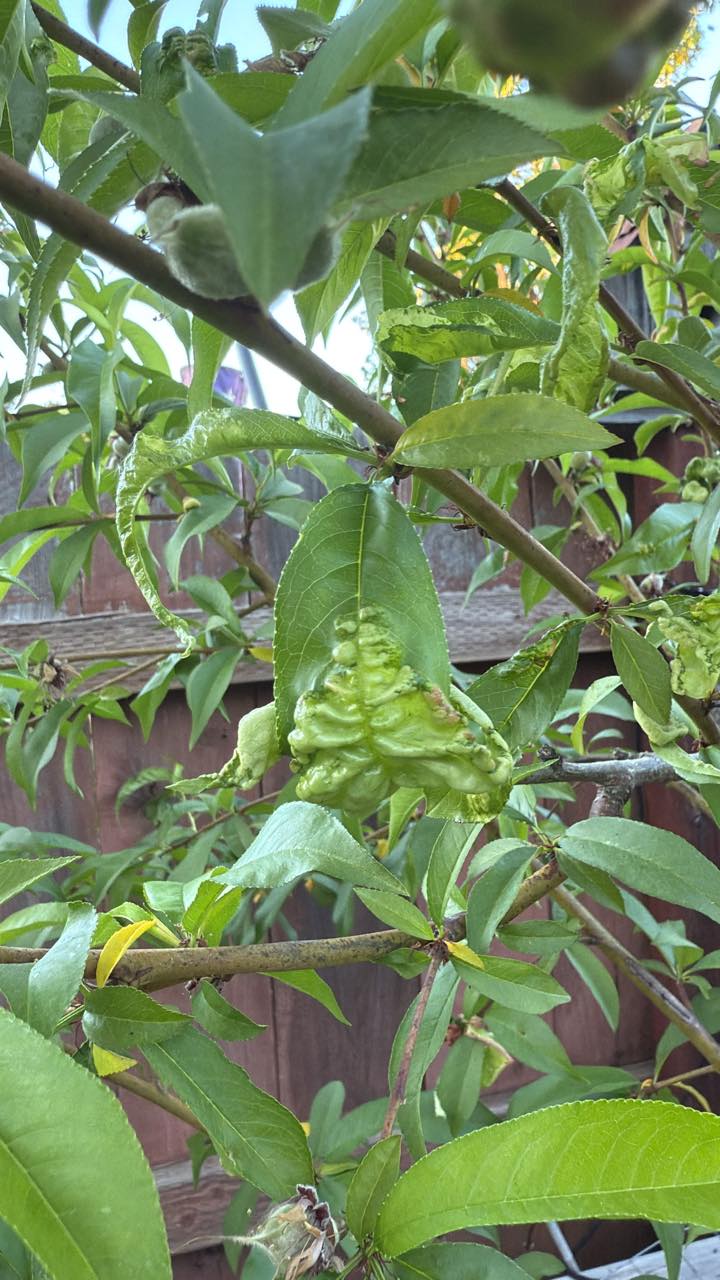
Yes, spraying copper during the dormancy phase (late winter) actually works on the leaf curl issue.
But I don't personally like this method, as copper works but with repeated use will contaminate your soil and has human health concerns.
All Phase ( a fungicide) has worked better than copper in university field trials, with the best timing prior to bloom, and it can be used through all phases of growth to control a number of other diseases, and all ingredients are FDA-approved food additives.
You can also use "Daconil fungicide."
One last line that I think I need to say.
The peach curl leaf issue is not too bad for your peach tree.
My aunt didn't put anything on her trees, and she got a lot of big juicy peaches. If you can avoid spraying, that's not an issue. Just remove those curly infected leaves and throw them in the bin.
Note: Neem oil does not work on peach leaf curl disease.
It takes time to write my experiences here. Consider subscribing to this site. This motivates me to write more for you.
Choose peach varieties that are resistant to fungus
To be honest, no peach variety is 100% immune to this fungus. But some varieties can tolerate this issue better than others and give better fruit production.
| Variety Name | Type | Key Characteristics |
|---|---|---|
| Frost | Peach | Highly resistant; ideal for cool, wet climates. |
| Avalon Pride | Peach | Superior resistance; discovered as a hardy chance seedling. |
| Indian Free | Peach | High resistance; late-season fruit; requires a pollinator. |
| Muir | Peach | Heirloom variety; naturally resistant; great for drying. |
| Redhaven | Peach | Tolerant and reliable; very popular commercial variety. |
| Kreibich | Nectarine | Rare nectarine variety with specific leaf curl resistance. |
| Harko | Nectarine | Cold-hardy; shows better tolerance than most nectarines. |
I have added 2 Nectarine varieties here.
If you want to know a fertilization guide specially for fruit trees based on growth stages, consider this article: Best fertilizers for fruit trees based on growth stages.