I have been growing crotons in my front yard for a long time. For me, croton is an easy-to-grow ornamental plant, but that does not apply to everyone. If you are growing a croton plant in its ideal growing condition, it's easy to grow; otherwise not.
Croton performs well when it's 65–85°F (18–30°C). I have seen crotons struggling when it's too cold or when there are sudden temperature drops.
In this article, I’ll share the most common reasons why Croton plant leaves dry up. To make it more helpful, I’ll also include pictures for most of the causes.
Causes: why croton plant leaves are drying up
These are the most common causes:
- Cold or sudden temperature drops.
- Low humidity
- Chemical damage
- Mealybugs
- Overwatering
I know that's a lot of causes for a particular issue, but still, you can differentiate them easily through my pictures.
Croton plant leaves are drying due to cold damage
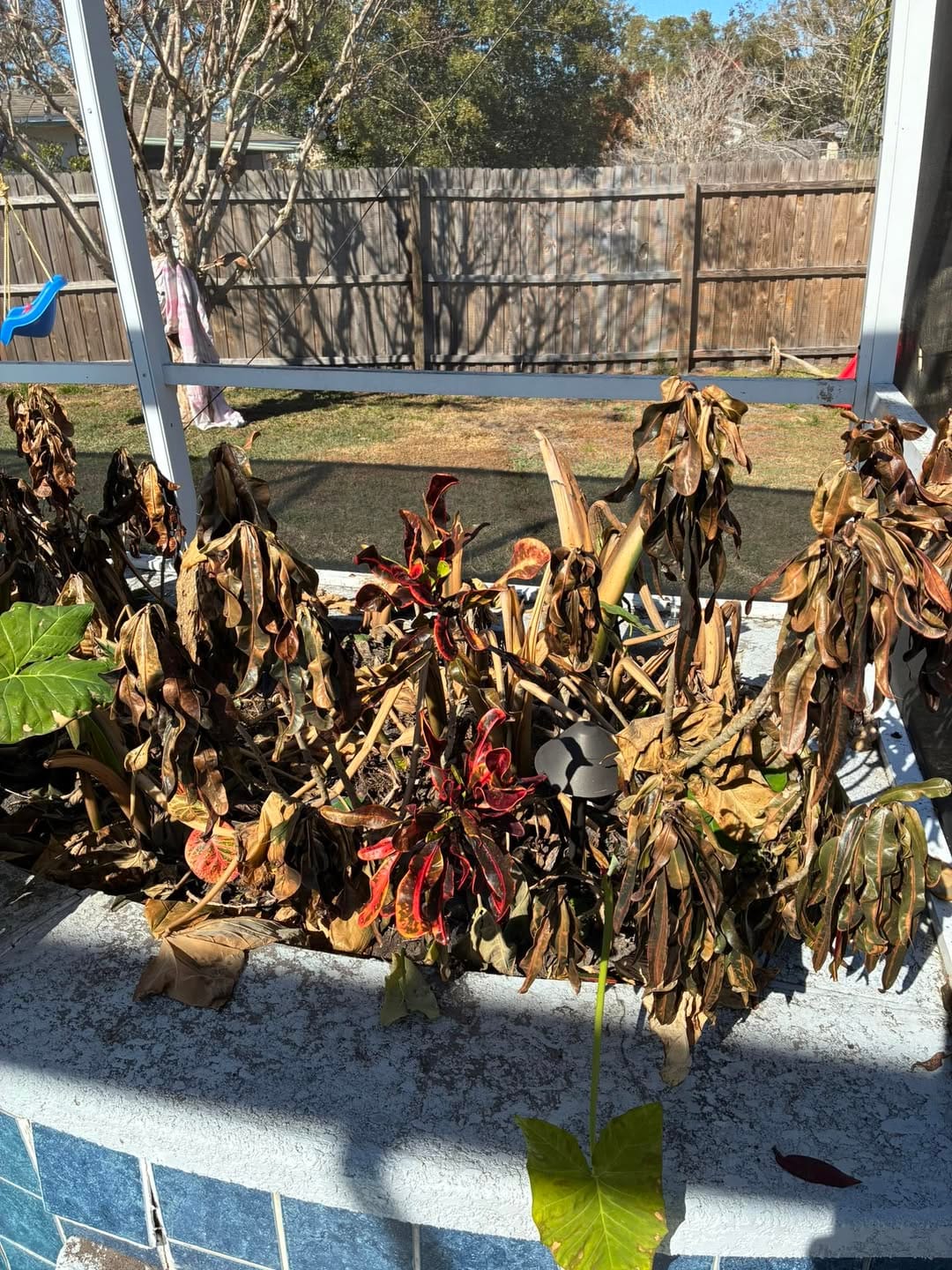
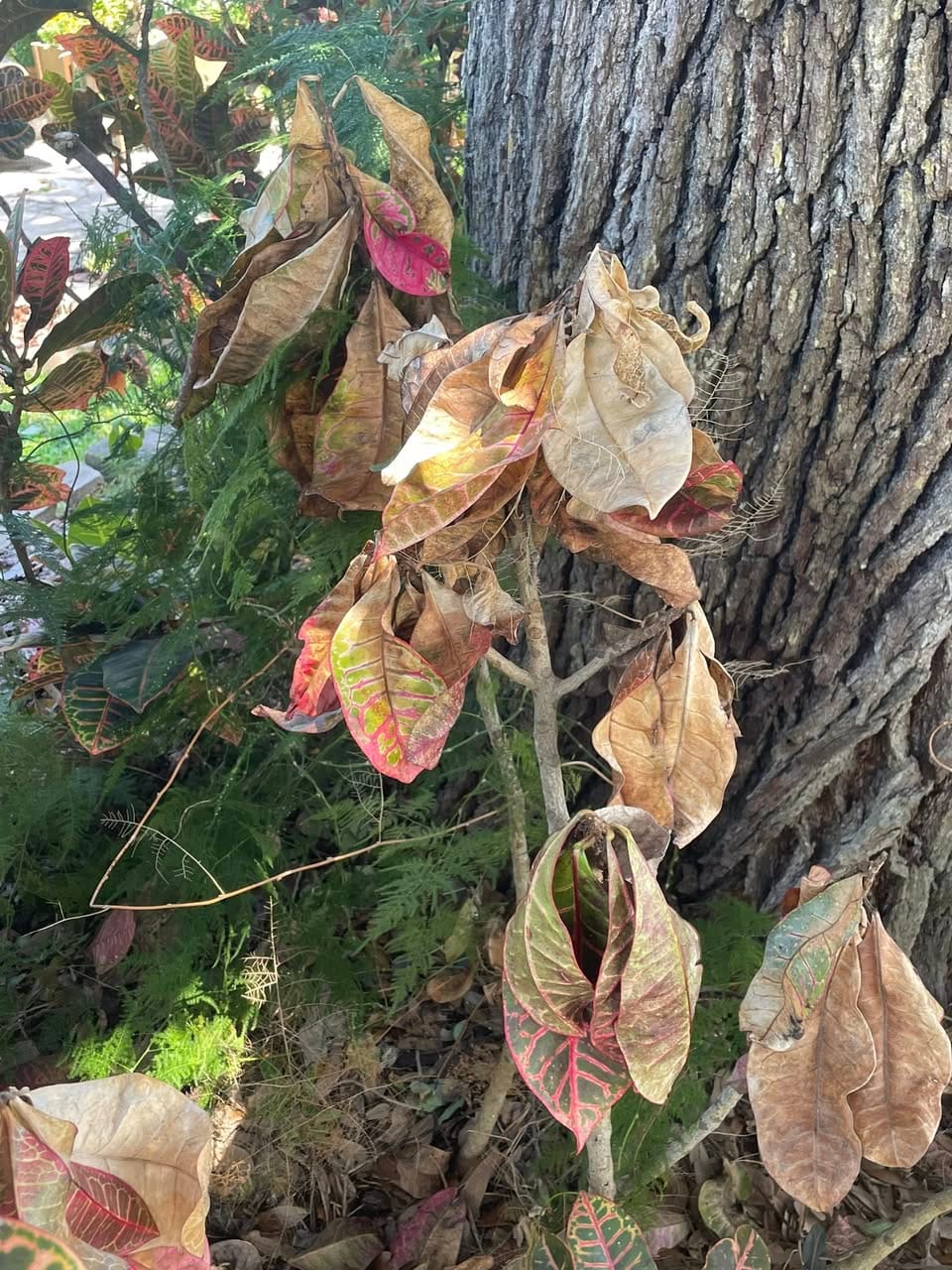
This is how a cold-damaged croton plant looks.
If your plant gets frostbite, you might witness this. Due to a sudden temperature drop, the same might happen to your plants.
If you are from a colder region and still growing this tropical plant, try to cover your plant during winter or bring it inside.
You can check my chart on when to cover plants in winter.
I have seen a lot of gardeners saying, cut it back, and it will regrow when the temperature rises.
But that is partially true. NEVER cut back cold damaged plant/trees till risk of the last frost is gone.
Do not cut back anything until the last chance of frost. They could easily come back. The cold-damaged part will protect the croton plant if there is any further cold weather. Leave it alone for now.
Croton leaves are drying up due to low humidity in winter
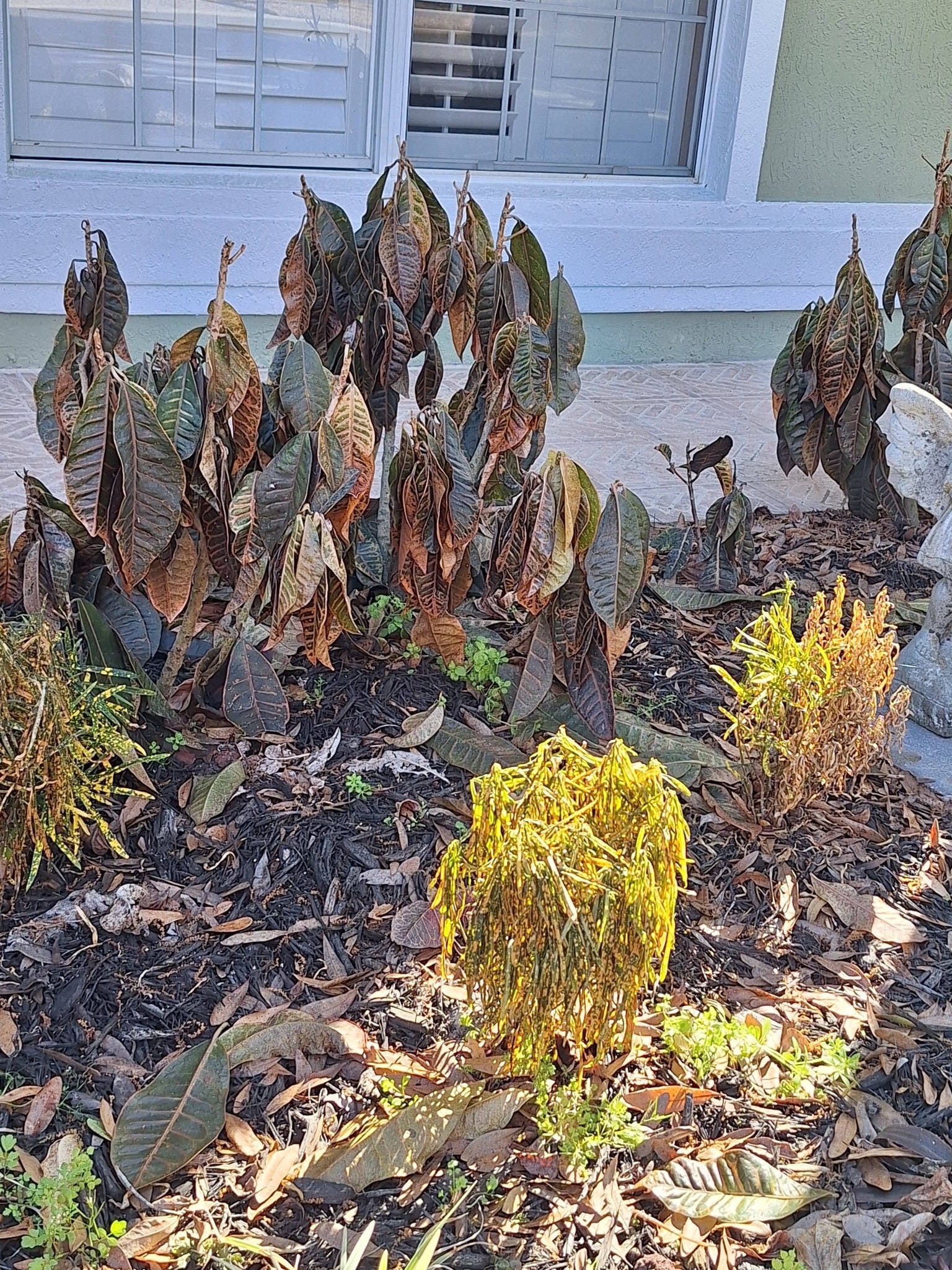
In winter, the humidity drops, and it's hard for tropical plants like croton.
You’ll be surprised by what survives below the soil. We’ve lost 90% of our tropical shrubs above the soil, but after cutting back to the ground in spring, they’ve shot up new growth. Even plumeria. Don’t give up yet!
Just remember: NEVER EVER, prune or cut back until the last frost date.
I usually cut back after February is over. Cut back time depends on your USDA zone. You can find yours here: when to cut back plants according to your USDA zone. - This is a complete pruning schedule.
What to do in this situation?
Wait 1–2 weeks to see what truly dies back. Keep soil slightly moist, not wet—cold roots + soggy soil = rot. Be careful with watering.
Scratch lightly—green = alive, brown/black = dead. (This is what most of us do to check)
Do not feed them until you see new growth.
It may take 3 to 6 weeks to see the recovery, so wait.
Chemical Damage to Croton
The leaves are gonna dry up faster than you can imagine due to excessive chemical fertilization.
The cover image for this article shows how a over fertilized croton plant looks like.
In this situation, do not feed your plant. Do not give any kind of stress, like pruning or moving.
Just wait and water regularly ( Avoid too much watering ).
Over-fertilized croton is the hardest to revive.
Over-watered croton plant
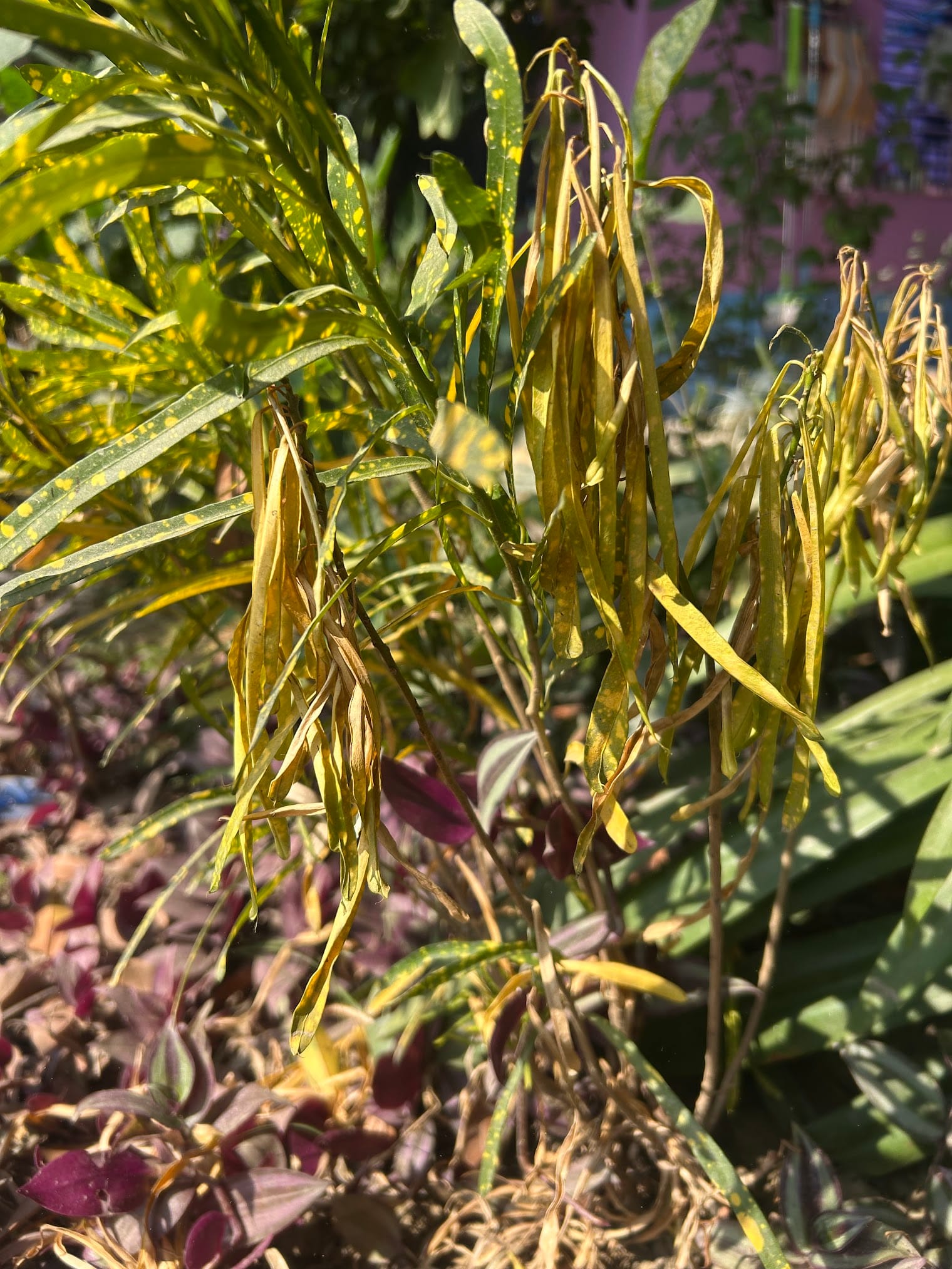
You may start noticing the wilting leaves at the very first stage, then they turn yellow. But a lot of croton leaves are usually yellow, and it's hard to identify yellow leaves due to overwatering.
In a few more days, you may witness the leaves falling off and drying quickly.
In this situation, do not panic and do not water for a couple of days. Let the soil dry completely.
You can add some dry mulch or perlite to the soil.
There is not much you can do with an overwatered croton plant. But hope for the best.
For mealybugs on croton, I have written a dedicated article on that. You can check that through this link: Mealybugs on croton - what to do?
If you feel my article was helpful to you, just subscribe to this site. This is something that helps me write more for you.