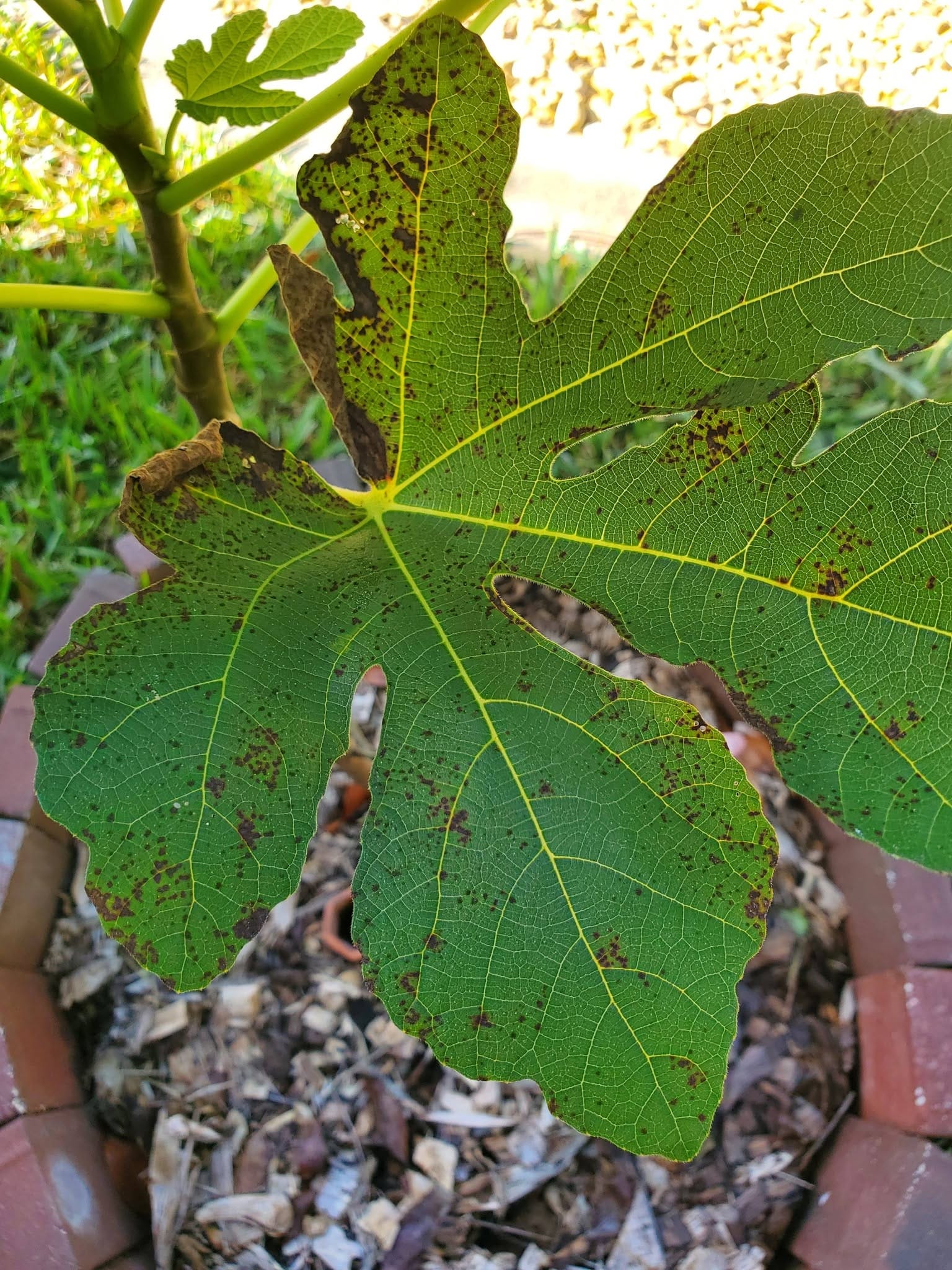
If you notice brown spots like this on your fig tree leaves, ask this question first: "Is it like this all year round or just at the end of the season?"
Mine usually do this come fall and winter and fall off. My tree produces perfectly fine during the season with new healthy leaves.
But if you are witnessing this type of brown spots year-round or most of the time, it's not usual, and you need to treat your fig tree as early as possible. An untreated fig tree can decrease fruit production.
You are gonna witness premature leaf drop as well.
In this article, I will tell you what causes the brown spots on fig leaves and how to treat them.
What causes brown spots on fig tree leaves
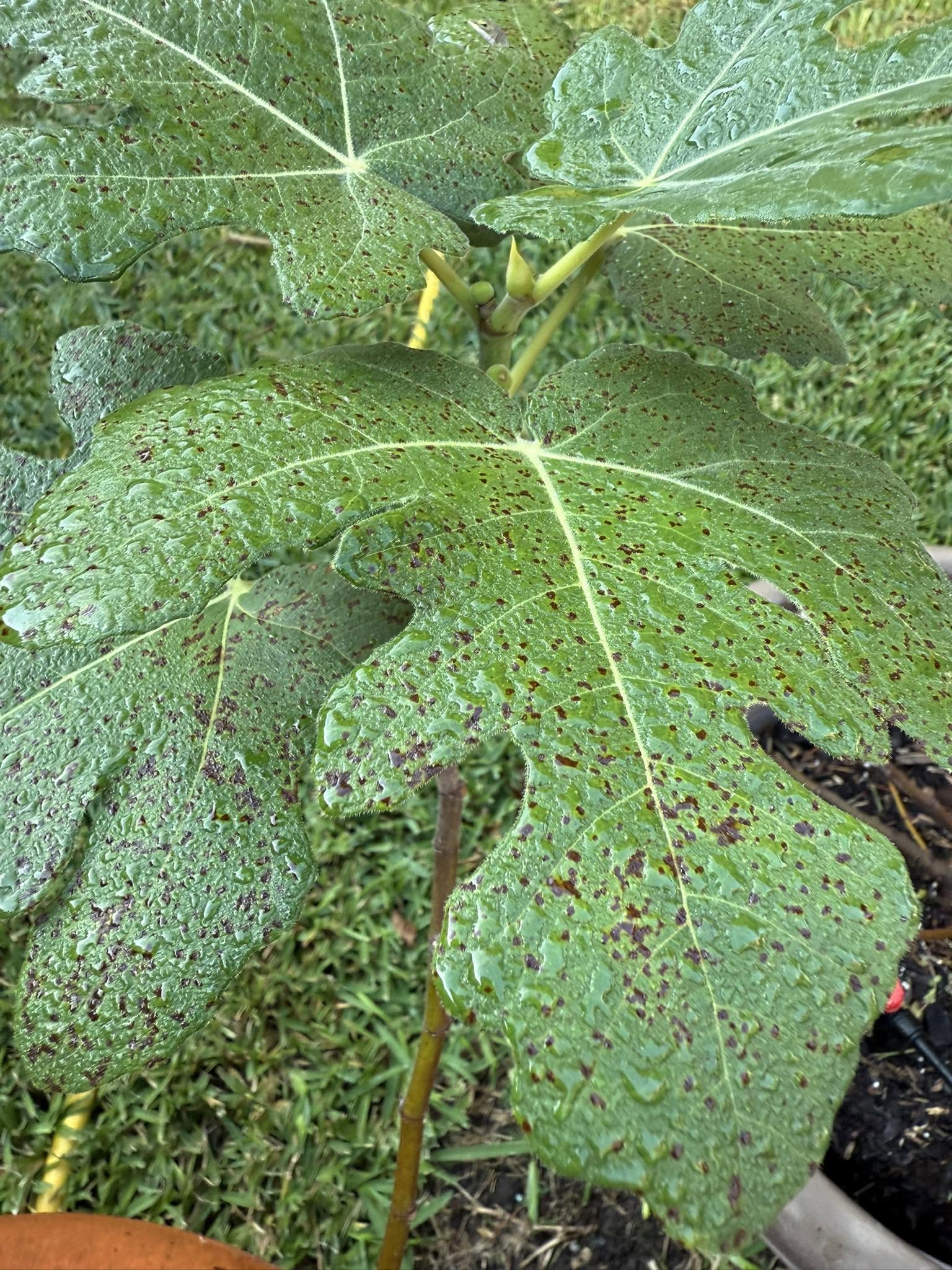
Rust is a type of fungus. If your fig tree is infected with rust, the leaves gonna look like this.
It all starts with small brown dots on the leaves, and they spread rapidly.
Treatment is very straightforward. You should apply fungicide.
Liquid copper fungicide and wettable sulfur are the most effective fungicides for managing rust on fig trees.
Here, I will share my personal experience.
To be honest, liquid copper fungicide is generally the better starting point than wettable sulfur.
Both are good and effective, but the most important factor is the timing of application.
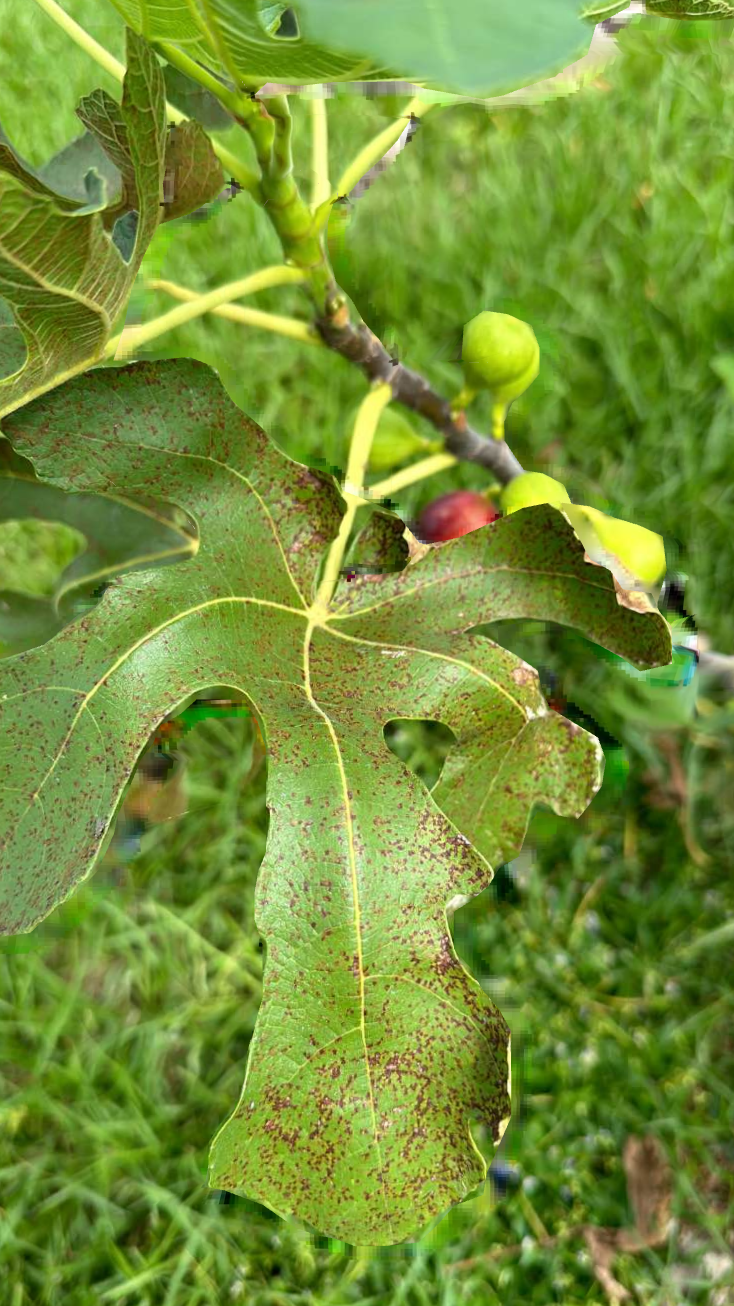
To be more specific, this is "Cerotelium fici".
This is a common fungal disease called fig rust.
What I have seen in my years of gardening, this usually shows up in late summer and fall and may cause premature defoliation, but it won't affect the fruit.
You need to take care of the following points:
- Proper fig tree pruning
- Regular cleaning of leaf litter
- Use of fungicides and keeping your tree dry.
These are all effective ways to prevent rust from forming.
If I were going to recommend a fungicide (which I don't recommend using), I would always choose the organic option. Copper and Sulfur are both allowed in organic farming (though they are inorganic molecules) and can get the job done.
You can also use a dormant oil, which I would recommend using selectively in the winter when growing fruit trees.
When applying fungicides, it's important to pay attention to the timing of the application. It is best to apply fungicides at the first sign of rust before the infection becomes severe.
I have had some success with biological fungicides like Bacillus amyloliquefaciens. That may not be the exact spelling. Copper-based fungicides work but are not good to eat.
How to apply liquid copper fungicide - treatment
Fig is an edible fruit, so your first task is to confirm that the product is approved for use on fig trees or edible fruit crops.
Follow the label's dilution rate. If you can't find that, ask the shopkeeper for guidance. Different copper formulations have different concentrations, so there is no single safe dose for every product.
I try not to recommend any specific brand, as I am not affiliated with any brand. You can check the reviews on the internet before buying.
Once diluted according to the label, mix well in a garden sprayer and spray on both sides of the leaves. (It's better to spray the whole tree)
DO NOT spray on a sunny day. Try to spray in the early morning or at night.
Repeat the method 3 times at an interval of 10 days.
Try not to spray during fruiting or blooming season.
Note: Liquid copper fungicide can be harmful to soil if you use it excessively. Wettable sulfur generally has less risk of long-term soil accumulation.