It's good to see that native plants are getting popular these days in North Texas. The more we understand the value of native plants for wildlife and nature, the more beautiful and healthy North Texas will become.
In this article, you will find all the major native plants that you can easily grow in your North Texas garden.
You might be familiar with my North Texas Planting Chart, where I listed all the plants separated by plant types.
I am doing the same with this article. As there are a lot of native plants in North Texas, it might be difficult for you to look for a specific native plant type if the list is too long.
A special thanks to you, as you are interested in growing native plants. Subscribe to this site to help me write more for North Texas Gardeners.
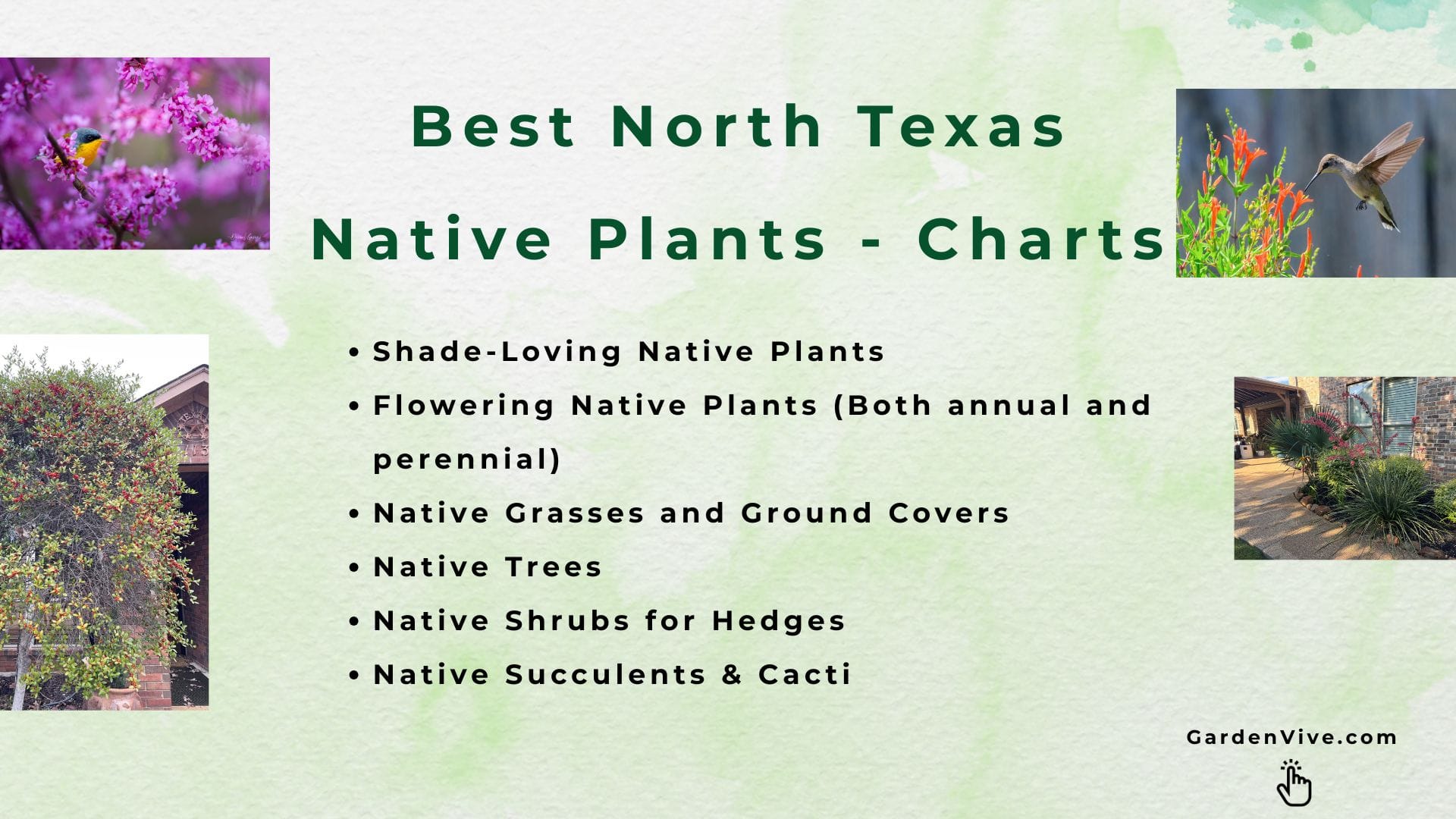
To make it easier for you and the native landscaper, I have introduced separate charts for the following:
- Shade-Loving Native Plants
- Flowering Native Plants (Both annual and perennial)
- Native Grasses and Ground Covers
- Native Trees
- Native Shrubs for Hedges
- Native Succulents & Cacti
I am not creating any separate category for drought-tolerant native plants, as most of the natives are adapted to tolerate drought in North Texas.
As there are multiple categories, some of the plants will overlap as they are gonna fit in multiple categories.
The heights mentioned in my charts are typical mature height range under normal growing conditions in North Texas.
Shade-loving native plants for North Texas
As the charts have multiple columns, please scroll side-wise (on small screen devices) to read all the available data.
I am sharing plant heights and Wildlife Value beside each plant, along with their best planting time.
| Plant Name | Light | Water Needs | Height | Wildlife Value |
|---|---|---|---|---|
| Turk’s Cap | Partial to Full Shade | Moderate | 3–6 ft | Attracts hummingbirds & pollinators |
| Inland Sea Oats | Partial Shade | Low to Moderate | 2–4 ft | Great for birds & erosion control |
| Columbine | Partial Shade | Moderate | 1–3 ft | Hummingbird favorite |
| Horseherb | Full to Partial Shade | Low | 3–6 inches | Groundcover, supports pollinators |
| American Beautyberry | Partial Shade | Moderate | 4–6 ft | Bird-attracting berries |
| Coralberry | Partial Shade | Low to Moderate | 2–4 ft | Supports birds & small wildlife |
| Texas Sedge | Full to Partial Shade | Low | 1–2 ft | Lawn alternative, habitat support |
| Wood Fern | Full Shade | Moderate | 2–3 ft | Good for moist shaded areas |
| Golden Groundsel | Partial Shade | Moderate | 6–12 inches | Early pollinator plant |
| Green-and-Gold | Partial to Full Shade | Moderate | 6–12 inches | Excellent flowering groundcover |
Flowering Native Plants (Both annual and perennial) for North Texas
If you have a preferred blooming time, you can choose the plants according to their blooming season.
Almost every flowering plant needs a good amount of sunlight to bloom nicely.
| Plant Name | Type | Bloom Season | Sun Requirement | Water Needs | Typical Height | Pollinator Value |
|---|---|---|---|---|---|---|
| Black-eyed Susan | Perennial | Spring to Fall | Full Sun | Low to Moderate | 1–3 ft | Bees & butterflies |
| Purple Coneflower | Perennial | Summer | Full Sun | Low | 2–4 ft | Bees, butterflies, birds |
| Lanceleaf Coreopsis | Perennial | Spring to Summer | Full Sun | Low | 1–2 ft | Bees & butterflies |
| Autumn Sage | Perennial | Spring to Fall | Full Sun | Low | 2–3 ft | Hummingbirds |
| Mexican Hat | Perennial | Summer to Fall | Full Sun | Low | 2–3 ft | Bees & butterflies |
| Texas Bluebonnet | Annual | Spring | Full Sun | Low | 1–2 ft | Bees & pollinators |
| Indian Paintbrush | Annual | Spring | Full Sun | Low | 1–2 ft | Hummingbirds |
| Plains Coreopsis | Annual | Spring to Summer | Full Sun | Low | 1–3 ft | Bees & butterflies |
| Drummond Phlox | Annual | Spring | Full Sun to Partial Shade | Moderate | 1–2 ft | Butterflies |
| Winecup (Purple Poppy Mallow) | Perennial | Spring to Summer | Full Sun | Low | 6–12 inches | Bees & butterflies |
| Blanket Flower | Perennial | Summer to Fall | Full Sun | Low | 1–2 ft | Bees & butterflies |
| Engelmann Daisy | Perennial | Spring to Summer | Full Sun | Low | 1–2 ft | Pollinators |
| Firewheel | Annual | Spring to Fall | Full Sun | Low | 1–2 ft | Bees & butterflies |
| Standing Cypress | Biennial | Spring to Summer | Full Sun | Low | 3–6 ft | Hummingbirds |
| Mealy Blue Sage | Perennial | Spring to Fall | Full Sun | Low | 2–3 ft | Bees & butterflies |
| Goldenrod | Perennial | Late Summer to Fall | Full Sun | Low | 2–4 ft | Important pollinator plant |
| Bee Balm | Perennial | Spring to Summer | Full Sun to Partial Shade | Moderate | 2–4 ft | Bees & hummingbirds |
| Pink Evening Primrose | Perennial | Spring | Full Sun | Low | 6–12 inches | Bees & pollinators |
If you are growing vegetables or fruits in your garden, plant a few of these native flowering plants.
These will improve your production yield as they will welcome more pollinators to your garden.
Native Grasses and Ground Covers for North Texas
| Plant Name | Type | Sun Requirement | Typical Height | Growth Habit | Landscape Use |
|---|---|---|---|---|---|
| Little Bluestem | Grass | Full Sun | 2–4 ft | Upright clumping | Ornamental, prairie gardens |
| Big Bluestem | Grass | Full Sun | 4–8 ft | Tall upright | Natural landscapes, screening |
| Switchgrass | Grass | Full Sun | 3–6 ft | Clumping | Erosion control, ornamental |
| Buffalo Grass | Grass | Full Sun | 4–6 inches | Spreading turf | Lawn alternative |
| Sideoats Grama | Grass | Full Sun | 1–3 ft | Clumping | Native meadows, borders |
| Inland Sea Oats | Grass | Partial Shade | 2–4 ft | Spreading clumps | Shade gardens, erosion control |
| Texas Sedge | Grass-like | Full to Partial Shade | 1–2 ft | Clumping | Shade lawn alternative |
| Frogfruit | Groundcover | Full Sun to Partial Shade | 3–6 inches | Spreading mat | Lawn alternative, pollinator plant |
| Horseherb | Groundcover | Full to Partial Shade | 3–6 inches | Spreading | Shade groundcover |
| Silver Ponyfoot | Groundcover | Full Sun | 4–10 inches | Trailing | Containers, borders |
| Green-and-Gold | Groundcover | Partial to Full Shade | 6–12 inches | Spreading | Flowering groundcover |
| Golden Groundsel | Groundcover | Partial Shade | 6–12 inches | Clumping spread | Pollinator support |
| Winecup (Purple Poppy Mallow) | Groundcover | Full Sun | 6–12 inches | Trailing | Flowering groundcover |
If you can trim your lawn on a regular basis, you can maintain the grass height as per your requirement.
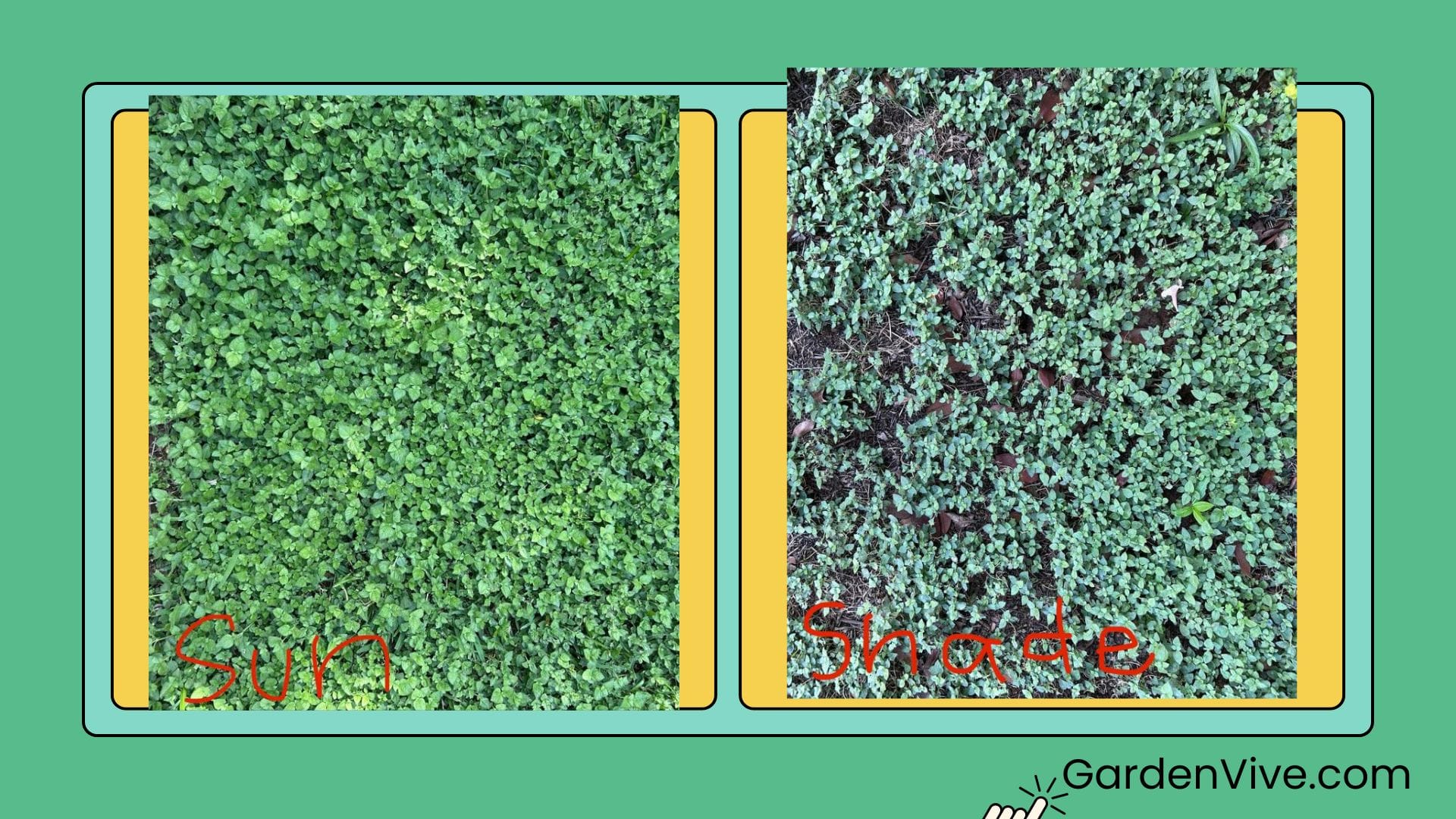
People love growing frogfruit as ground cover, but do you know that they can handle light foot traffic?
If you are lazy, then this can be a great choice for you. It's native, easy to maintain, and doesn't need too much mowing.
The next better option is Horseherb. It won’t survive heavy daily traffic, but it's good for a shady walking area.
But do not go for horseherb if the area is totally shady.
Native Trees for North Texas
This is the most valuable section for me, as choosing a tree is a long-term decision.
| Tree Name | Sun Requirement | Typical Height | Growth Rate | Canopy Spread | Best Use |
|---|---|---|---|---|---|
| Live Oak | Full Sun | 40–60 ft | Moderate | 60–100 ft | Shade tree, long-lived landscape anchor |
| Texas Redbud | Full Sun to Partial Shade | 15–25 ft | Moderate | 15–25 ft | Ornamental, spring blooms |
| Cedar Elm | Full Sun | 40–70 ft | Moderate | 40–60 ft | Street tree, shade |
| Bald Cypress | Full Sun | 50–70 ft | Fast | 25–35 ft | Wet areas, large landscapes |
| Mexican Plum | Full Sun to Partial Shade | 15–25 ft | Moderate | 15–25 ft | Flowering, wildlife food |
| Desert Willow | Full Sun | 15–25 ft | Fast | 15–25 ft | Drought-tolerant ornamental |
| Chinquapin Oak | Full Sun | 40–60 ft | Moderate | 40–60 ft | Shade, drought-tolerant oak |
| Bur Oak | Full Sun | 50–80 ft | Slow to Moderate | 50–80 ft | Large shade tree |
| Eastern Red Cedar | Full Sun | 20–40 ft | Moderate | 10–20 ft | Windbreak, wildlife habitat |
| American Elm | Full Sun | 60–80 ft | Fast | 40–70 ft | Shade, street tree |
| Black Walnut | Full Sun | 50–75 ft | Moderate | 40–60 ft | Nut production, large landscapes |
| Pecan | Full Sun | 70–100 ft | Moderate | 40–75 ft | Nut tree, shade |
Live oak can be a good choice, but if you are planning to grow something underneath, avoid live oak. It is good as a shade tree.
In spring, your oak tree will be shedding a lot of male flower tassels (catkins).
Those catkins are free and good to go on your raised beds. They’re great as a brown (carbon-rich) layer in a lasagna-style bed.
The underneath of an Oak tree remains clean and clear. Even turfgrass struggles to grow under it.
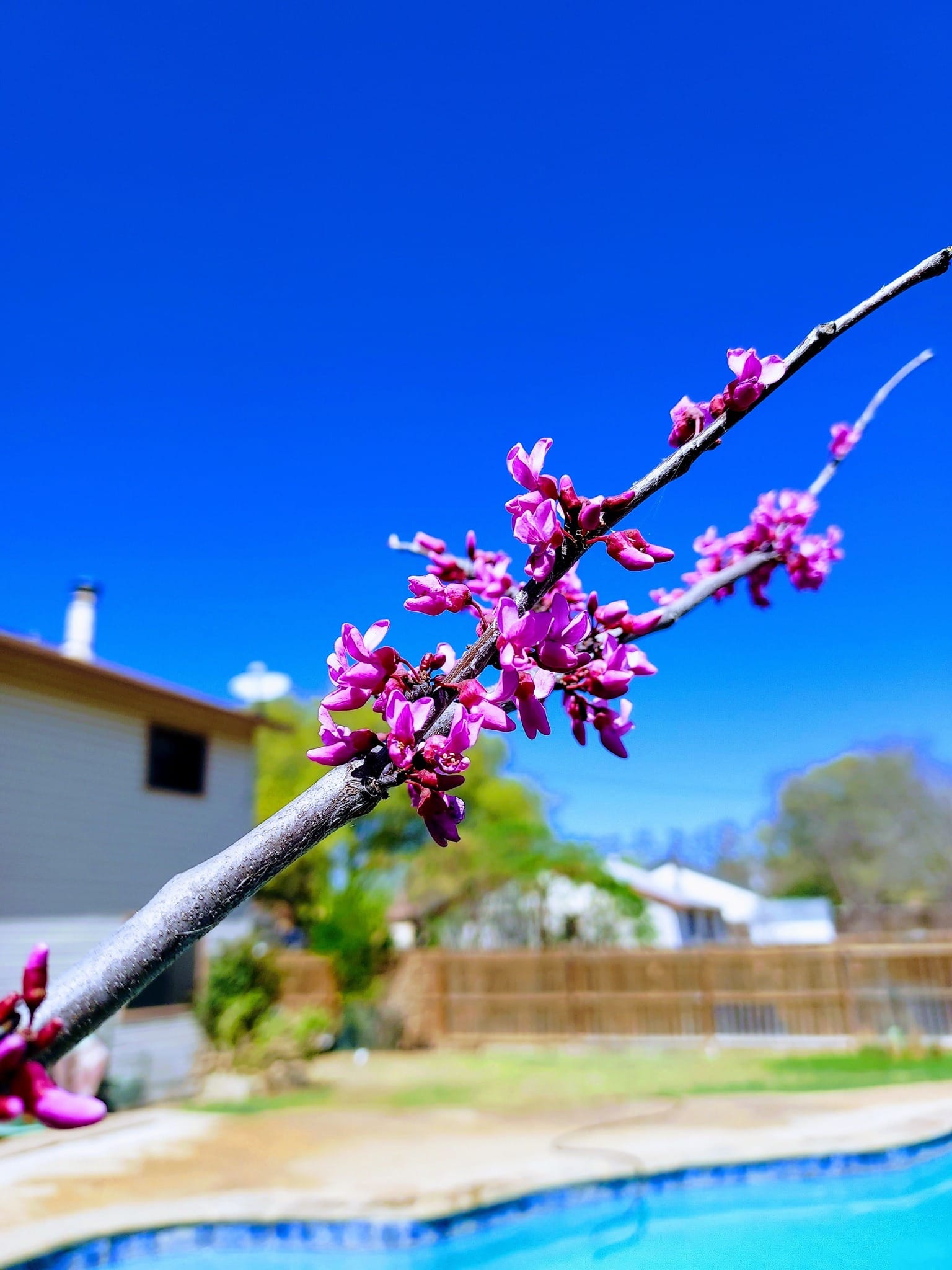
If you ask my personal opinion, I love Texas Redbud the most. This is the tree that makes my yard colorful in spring.
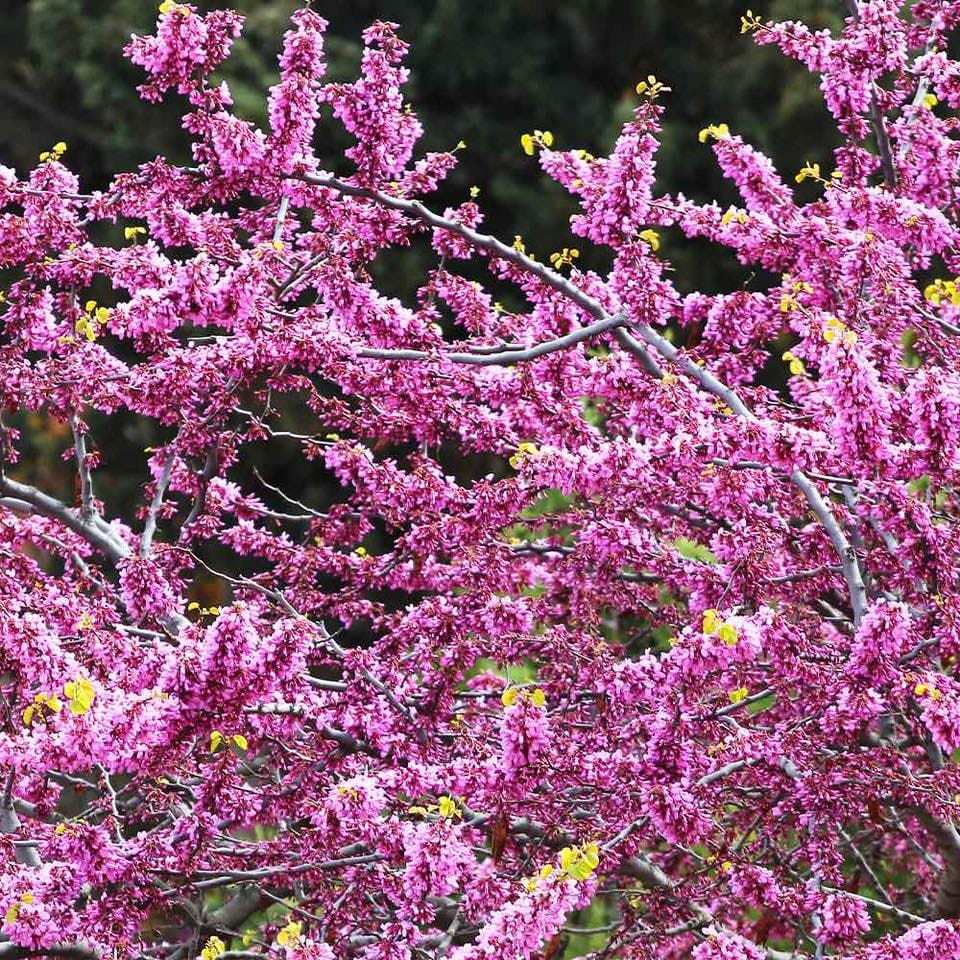
There are a lot of hybrid varieties out there. Make sure to grow the native one.
North Texas Native Shrubs for Hedges
| Shrub Name | Sun Requirement | Typical Height | Growth Rate | Evergreen / Deciduous | Spacing for Hedge | Best Use |
|---|---|---|---|---|---|---|
| Yaupon Holly | Full Sun to Partial Shade | 10–20 ft | Moderate | Evergreen | 4–6 ft apart | Dense privacy hedge, formal or informal |
| Wax Myrtle | Full Sun to Partial Shade | 10–20 ft | Fast | Evergreen | 5–8 ft apart | Fast-growing screen |
| Texas Sage | Full Sun | 5–8 ft | Moderate | Evergreen | 3–5 ft apart | Drought-tolerant hedge |
| American Beautyberry | Partial Shade | 4–6 ft | Fast | Deciduous | 3–4 ft apart | Wildlife hedge, informal |
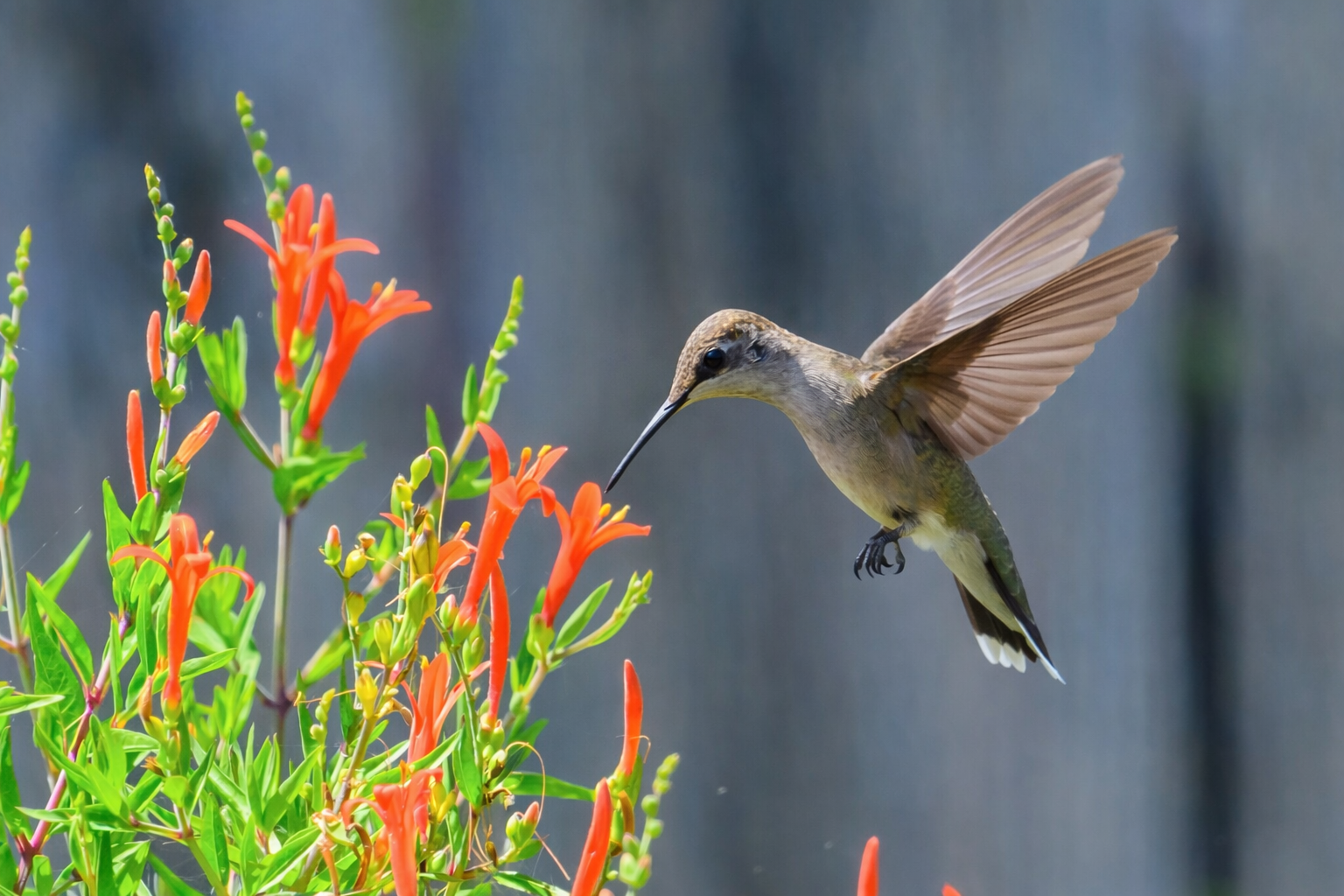
| Flame Acanthus | Full Sun | 3–5 ft | Moderate | Deciduous | 3–4 ft apart | Pollinator hedge |
| Agarita | Full Sun to Partial Shade | 3–6 ft | Slow to Moderate | Evergreen | 3–5 ft apart | Thorny security hedge |
| Possumhaw Holly | Full Sun to Partial Shade | 10–15 ft | Moderate | Deciduous | 5–6 ft apart | Wildlife-friendly hedge |
| Buttonbush | Full Sun to Partial Shade | 6–12 ft | Fast | Deciduous | 4–6 ft apart | Wet areas, pollinator hedge |
| Sumac (Flameleaf Sumac) | Full Sun | 6–12 ft | Fast | Deciduous | 4–6 ft apart | Natural screen, fall color |
| Coralberry | Partial Shade | 2–4 ft | Moderate | Deciduous | 2–3 ft apart | Low hedge, wildlife support |
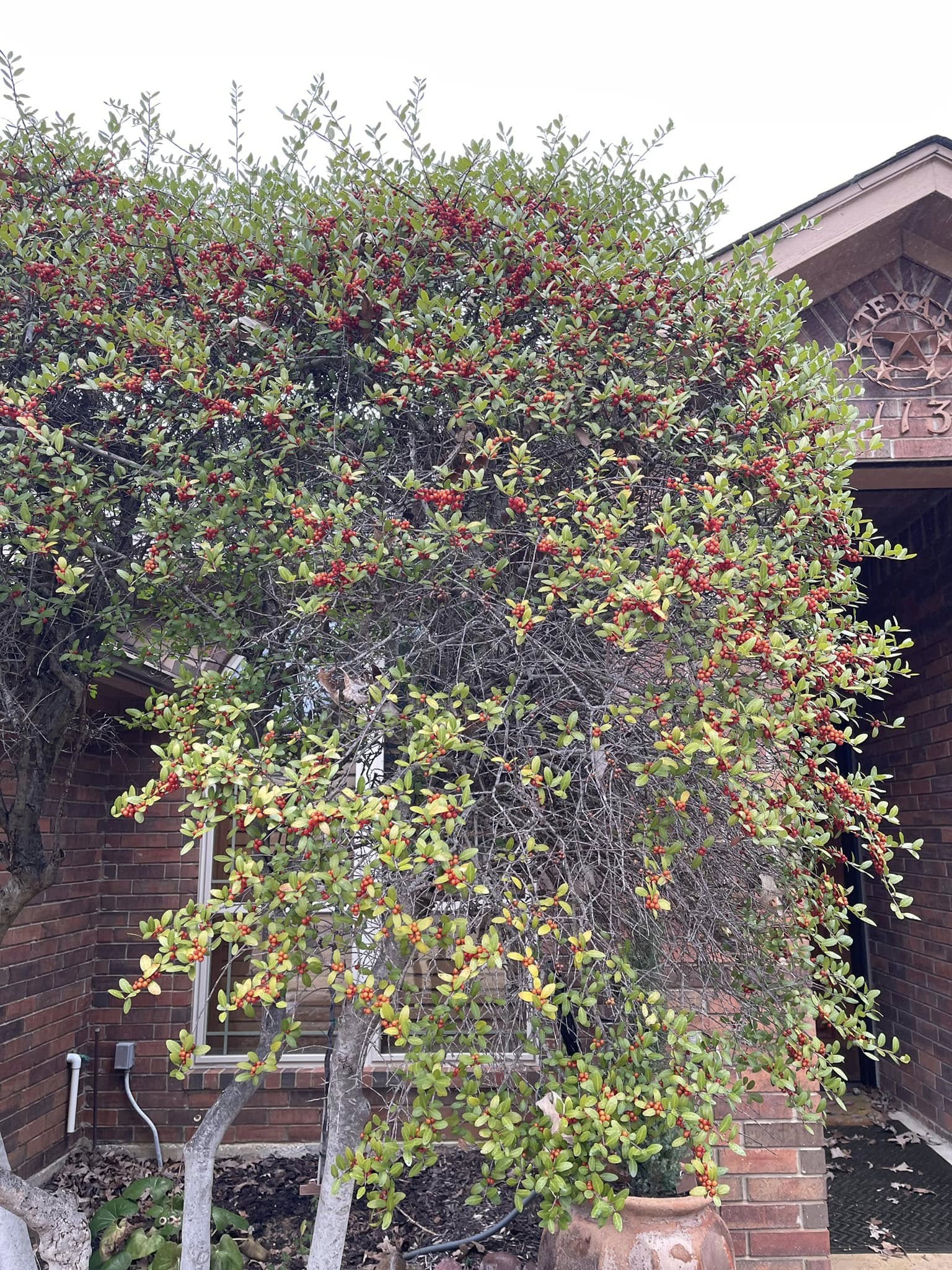
Yaupon Holly can handle drought, bad soil, sun, and shade. It is evergreen and dense. There are dwarf varieties too.
Flame Acanthus attracts hummingbirds too...
Native Succulents & Cacti for North Texas
| Plant Name | Type | Sun Requirement | Typical Height | Growth Habit | Landscape Use |
|---|---|---|---|---|---|
| Prickly Pear (Opuntia) | Cactus | Full Sun | 3–6 ft | Spreading pads | Xeriscape, edible fruit, barrier planting |
| Engelmann’s Prickly Pear | Cactus | Full Sun | 3–5 ft | Clumping spread | Wildlife habitat, drought gardens |
| Texas Prickly Pear | Cactus | Full Sun | 2–5 ft | Spreading | Low-maintenance landscapes |
| Horse Crippler Cactus | Cactus | Full Sun | 6–12 inches | Low, rounded | Rock gardens |
| Claret Cup Cactus | Cactus | Full Sun | 1–2 ft | Clumping | Ornamental blooms, xeriscape |
| Twisted-Leaf Yucca | Succulent | Full Sun | 2–3 ft | Rosette | Accent plant, dry landscapes |
| Red Yucca | Succulent | Full Sun | 2–4 ft | Clumping | Pollinator plant, borders |
| Soapweed Yucca | Succulent | Full Sun | 3–6 ft | Upright rosette | Structural landscape element |
| Agave (Native Species) | Succulent | Full Sun | 1–3 ft | Rosette | Xeriscape focal point |
| False Aloe (Manfreda) | Succulent | Full Sun to Partial Shade | 1–2 ft | Low rosette | Unique foliage interest |
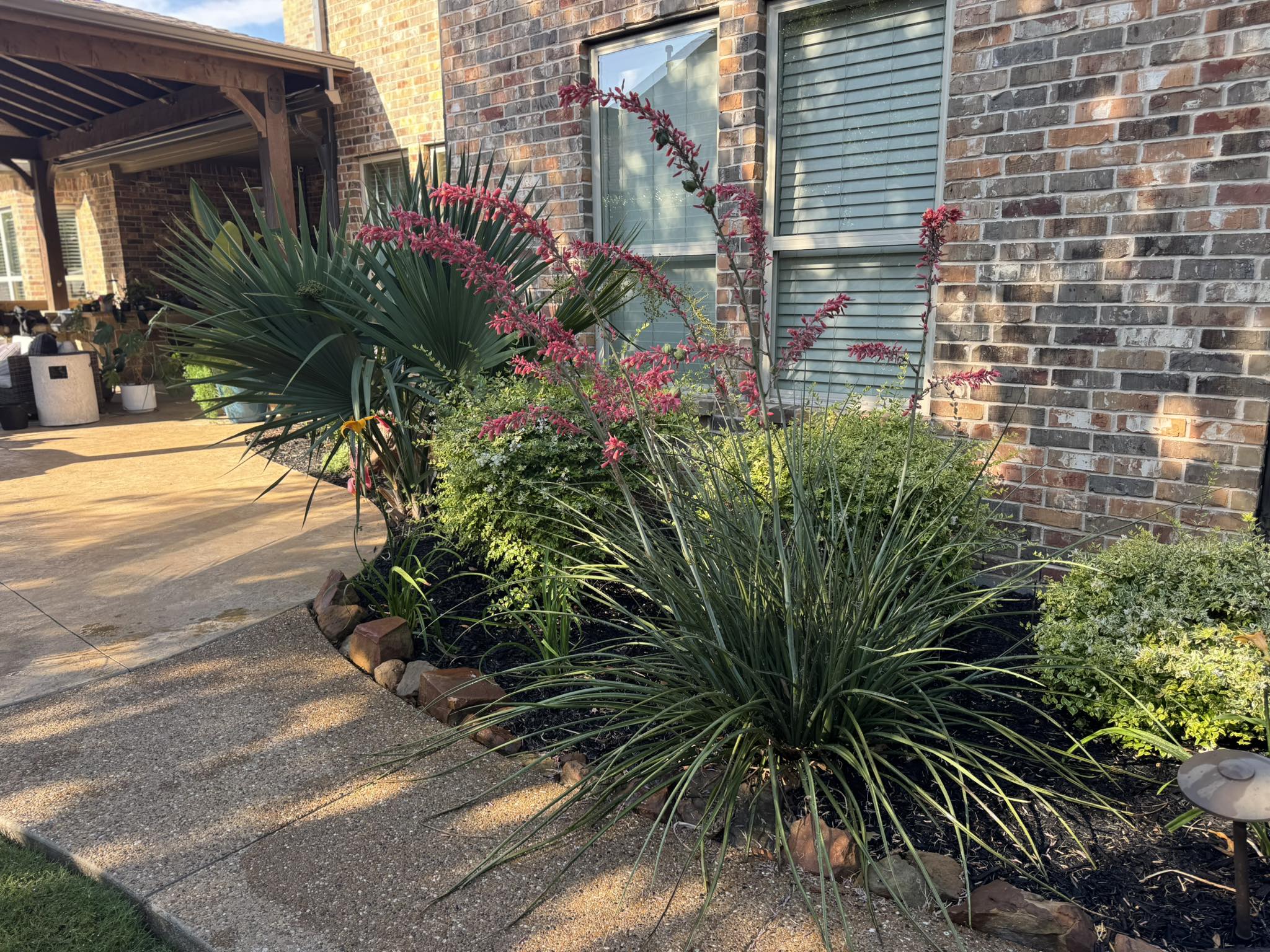
Red yucca can survive in shade, but blooms drop significantly if planted under shade.